Summary
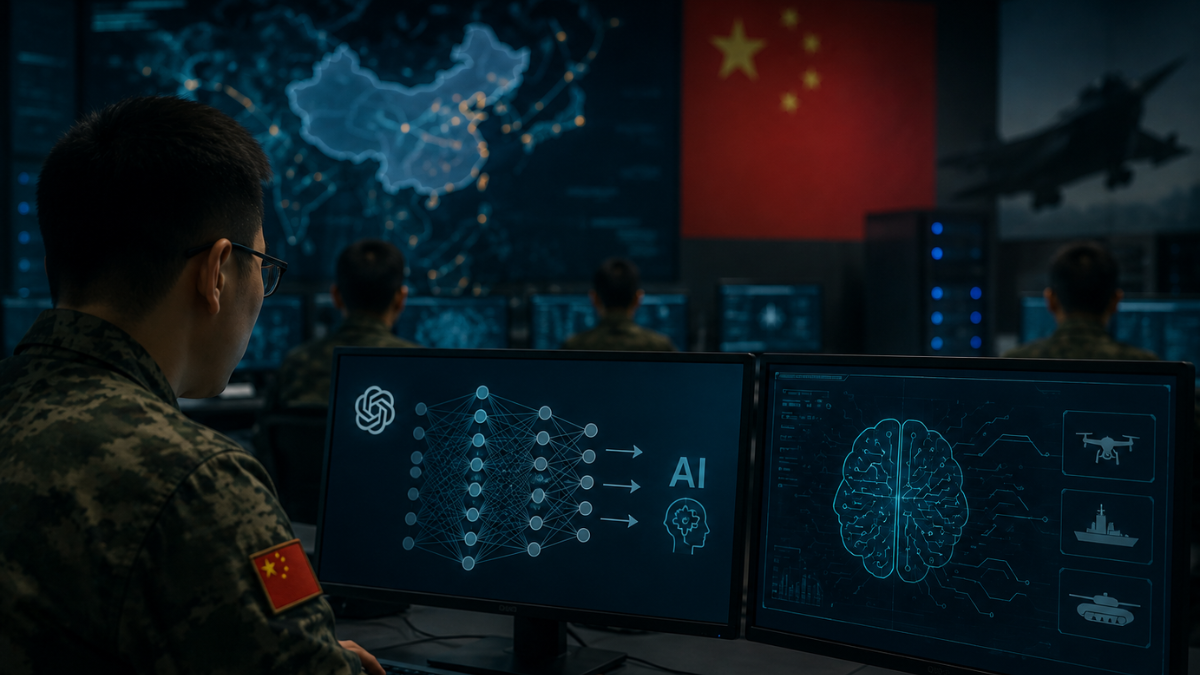
Chinese military researchers are quietly extracting critical logic from American AI models to fast-track Beijing's own national defense systems, bypassing Washington's tight export controls. By analyzing dozens of academic papers, we've uncovered how institutions tied to the People's Liberation Army (PLA) use a process called distillation. This technique shrinks the intellectual power of top-tier Western systems like OpenAI's GPT models into lightweight, localized software. It’s a clever workaround. It lets Chinese defense teams dodge the severe hardware limits imposed by U.S. bans on advanced chips. While Beijing strongly rejects allegations of AI hegemony, these discoveries show a massive shift in how the superpower conflict over strategic technologies is playing out. As international summits on AI governance stall, these distilled systems are already being prepped for autonomous drone swarms, surveillance, and next-gen cyber warfare.
The Mechanics of Distillation in Modern Warfare
The front lines of this war today are no longer soldiers on the ground or satellites in orbit. It is now a digital one, taking place within the mysterious and intricate architecture of neural networks. Emerging intelligence reports that Chinese researchers working for the People's Liberation Army (PLA) have begun harvesting Western AI systems to develop more effective military AI technologies; a shortcut so short it's mindboggling.
Instead of investing billions of dollars and years training huge frontier-level systems from scratch-this is practically impossible given the US hardware restrictions-they're opting to cheat off someone else's paper.
It involves a process known as.
Pretty much. Think of it as grabbing a university course textbook and rolling up the pages into a checklist you can carry around with you at all times. What Chinese researchers do is they query some of the best, most sophisticated American language models; they log how those models hand down solve certain problems they want solved, and then they use those cataloged responses to train far less big, far more local models.
They don't need the sprawling cloud architectures like OpenAI or Anthropic.
By trans-coding those highly, narrowly trained, highly distilled models into localized defence hardware, China is ensuring that its tier 1 fighter hardware takes zero dependency on totally lonesome web access when it most can't use it, like in drone swarms patrolling contested waters.
PLA Unit 96941 and the Code Extraction Challenge
This is not some hypothetical danger locked away in deep think tanks. It's alive and well within active research facilities. Consider the example of PLA Unit 96941.
In civilian academic journals highlight the fact that their agents have been leveraging the GPT-3.5 instance of OpenAI to decrypt, analyze, and streamline critical military software code.
Now, one might imagine how the design has been and still can be managed without alerts ringing away in California. They just choose not to upload ancient military secrets to a public API belonging to OpenAI.
They employ an intermediary:
They have a model pestered for everyday programming logic, cop out a bit of that, and then install it on a sealed-off system that never sees the outside. They are circumventing the so-called "data-free distillation" problem. The aim is not so much to replicate generic solutions, but to steal the logic paths.
Once a local military computer grasps the "why" of decision-making, it becomes exponentially more trustworthy.
It doesn't have to be an enormous, all-round chatbot. It simply has to do a single task-like locating a naval target, or guiding a missile-exceptionally well.
Anthropic, Claude 3, and the Safety Gap
The situation got even more complicated with the release of Anthropic's Claude 3. Researchers at the North University of China, an institution closely tied to the country's defense and weapons manufacturing sectors, have been using these advanced systems to create synthetic datasets. This generated data is then used to fine-tune domestic surveillance and target-tracking systems. It's a highly organized effort to repurpose civilian tools for state security.
Anthropic has been clear that they don't sell or allow their services in China. Yet, those restrictions don't stop determined actors from finding a way in. Once a model's logic is distilled into a smaller, offline unit, the ethical guardrails, safety filters, and usage limits designed by Western engineers are completely gone. You're left with a powerful, unrestricted engine. It can be pointed at whatever the military wants, from domestic tracking to automated battlefield decisions, with absolutely zero oversight from the companies that built the original foundation.
The Strategic Flashpoint: Chips vs. Code
For the past few years, Washington has focused heavily on physical blockades. They've restricted the flow of high-end silicon, hoping to starve China's AI ambitions at the source. But this software-focused strategy shows that Beijing has found a major loophole. It's a pivot from hardware to pure code. If you can't buy the latest processors, you can still extract the intelligence generated by those processors elsewhere in the world.
This shifts the entire geopolitical market. It makes traditional export controls look incredibly outdated. If critical military advantages can be transferred through a series of API queries, then blocking physical chips is only a partial fix. It’s an asymmetric challenge that Western policymakers are desperately scrambling to address. They're realizing that protecting the physical supply chain doesn't mean much if the intellectual crown jewels are leaking out through public web interfaces.
Forward Outlook: Can Distillation Be Stopped?
Can the West actually plug this leak? It's a massive question with no easy answers. Chinese tech companies, including Moonshot AI, the creators of the highly publicized Kimi K3 model, insist that their technologies are entirely proprietary. They claim their breakthroughs come from local innovation, not Western data. But the paper trail left by military academics tells a very different story. The sheer volume of published research on model distillation shows that this is a systematic, state-sanctioned strategy.
We're heading toward a future where software security will dominate defense talks. The U.S. will likely push for strict monitoring of API access, trying to flag patterns that look like systematic distillation. Meanwhile, Beijing will almost certainly call these moves protectionist. The technological race is no longer just about who can build the biggest computer. It's about who can copy, shrink, and weaponize the world's best code the fastest.