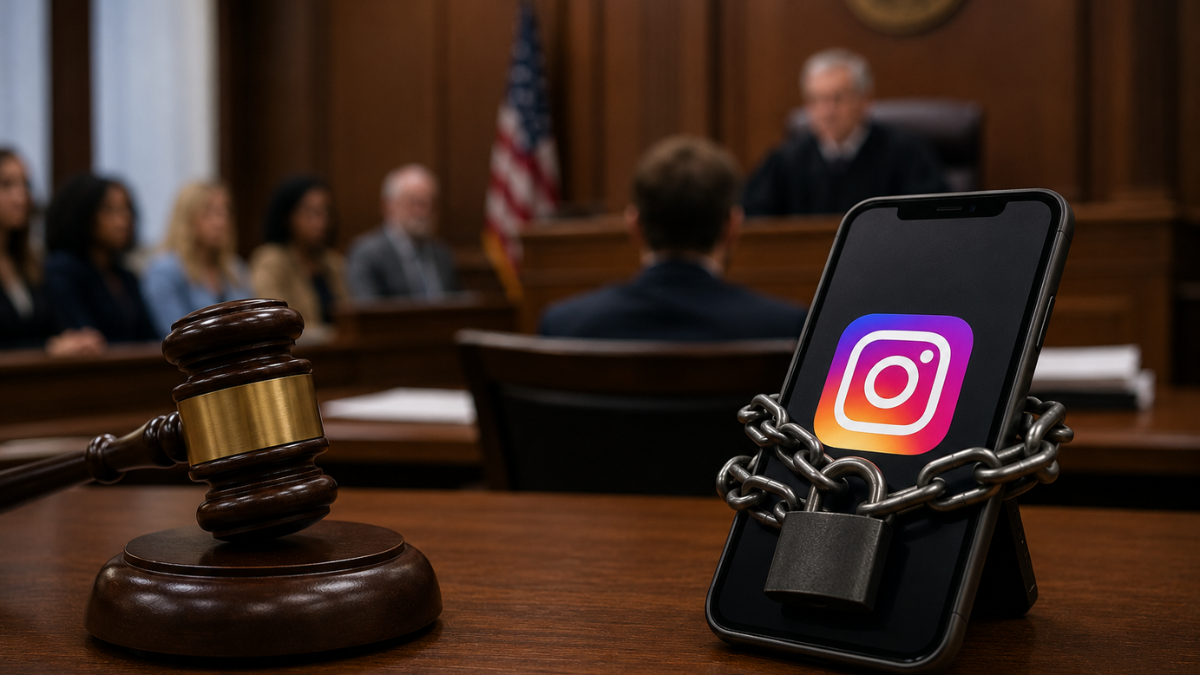
Jury selection kicked off Monday in Nashville, and if you've been following the legal battles around social media and teen safety, this one has been a long time coming. The Meta Tennessee trial over Instagram and youth mental health is now officially in front of a jury - and it's the opening move in what's shaping up to be a genuinely consequential summer for how the law treats social media platforms.
Seven weeks. That's how long the trial is expected to run. And it overlaps with at least two other major cases against Meta scheduled in California courts this summer.
Www.Globalbyte.News covers tech and digital regulation stories like this as they develop - and this one is worth watching closely.
What Tennessee Claims in the Instagram Youth Mental Health Lawsuit
Attorney General Jonathan Skrmetti's office didn't file a vague complaint. The lawsuit is specific: Tennessee says Meta violated the state's consumer protection law by deliberately building Instagram to drive teenagers toward compulsive use - and then misleading the public about the platform's safety record.
The state claims Meta held onto internal research showing Instagram could harm teens. It kept pushing features it knew were risky. And according to the filing, Mark Zuckerberg was personally warned by employees who had reviewed that internal research on Instagram's negative impact on youth mental health. He allegedly declined to fund efforts to reduce those harms, and made public statements that didn't match what the company knew internally.
If the jury believes that, it's a damaging picture.
The Design Features at the Center of This Case
This isn't just a content moderation argument. Tennessee's case targets specific Webdev and product design decisions - the kind engineers and product managers make deliberately.
The features the state calls out:
- Autoplay on Reels videos
- Notification systems designed to pull users back repeatedly
- Disappearing content that creates urgency and compulsive return behavior
The argument is that these aren't neutral side effects of a social platform. They're intentional choices. The AI-powered recommendation systems that decide what plays next, how long to keep a teen scrolling, and when to fire a push notification - those systems are at the core of what Tennessee calls harmful design.
Skrmetti is asking for financial penalties and a court order requiring Instagram to change those features. Tennessee's consumer protection law allows fines of up to $1,000 per violation, which adds up fast at Instagram's scale.
What Meta Is Saying in Its Defense
Meta's response works on two levels. The practical one: the company says it already has age-appropriate defaults for teens and parental control tools built in. "We want them to do that in a protected space," a Meta spokesperson said Friday. Reasonable-sounding, until you read what the lawsuit actually alleges.
The legal argument is more significant. Meta is leaning hard on Section 230 of the Communications Decency Act. The company argues the harms Tennessee describes are really about content posted by users - and Section 230 shields platforms from liability for third-party content. It's a defense Meta has used in case after case.
Tennessee's counter is that these claims aren't about what users post. They're about Meta's own product design decisions, and the Security and safety obligations that flow from those decisions aren't covered by Section 230. Whether that holds up is one of the most consequential legal questions this trial will answer.
A Very Crowded Legal Calendar This Summer
This case doesn't exist in isolation.
The Nashville trial starts July 21. On July 27, a separate trial begins over claims from a 15-year-old Florida boy known as R.K.C. - involving both Meta and Snapchat parent Snap Inc. - who says social media damaged his mental health. Then on August 18, a federal court in California opens a trial involving 29 states, with claims covering federal children's data collection violations and additional state law claims from California, Colorado, Kentucky, and New Jersey.
Nearly every state has now filed claims against Meta. Individual plaintiffs and school districts have stacked on thousands more lawsuits in both state and federal court. What started as scattered litigation has turned into a coordinated legal push. Startups that built dominant platforms during a decade of minimal regulatory scrutiny are now sitting in front of juries and answering for it.
The Science of adolescent psychology has been building a case against these platforms in peer-reviewed literature for years. Summer 2026 is when that research starts getting read into courtroom records.
New Mexico Set the Benchmark - and It Was $375 Million
Tennessee isn't going first into completely unknown territory. New Mexico took Meta to trial earlier this year, and it went badly for the company.
A New Mexico jury found Meta had misled consumers about the safety of its Facebook, Instagram, and WhatsApp platforms. The verdict: $375 million in damages. A separate bench trial on New Mexico's public nuisance claim is still pending - the judge hasn't ruled yet on whether to order platform changes or additional damages on top of that figure.
That $375 million number hangs over Nashville. Tennessee's jury carries that context even if they're not supposed to factor it in directly.
It's a packed summer for tech coverage across the board. Hardware stories like Samsung Yongin Semiconductor Wafer Fab C accelerating toward a 2029 production target, space science coverage like Tianwen 2 Quasi Moon Kamo Oalewa Image 1 tracking China's deep space ambitions, and AI applications like How Shanghai Meteorological Bureau Ai Ty showing machine learning put to work on public safety - all of it is happening while Meta sits in a Nashville courtroom answering for what its algorithms did to teenagers.
What This Meta Tennessee Trial Could Actually Change
The Meta Tennessee trial over Instagram's design and youth mental health isn't just about one state or one platform. It's a test of whether state consumer protection law can reach into how a product is built - not just what users say on it.
If a Tennessee jury decides that Meta's intentional product design crosses a legal line, that has implications for every social media company in every state. The Gadgets and apps teenagers carry in their pockets every day would face a legal standard they haven't had to meet before.
Watch how the Section 230 argument plays out. That's the pivot point. If it holds, Meta and the rest of the industry stay largely shielded, and the damage is contained. If it fails here - if Tennessee convinces a jury that algorithmic product design is categorically different from content - the consequences ripple through this Meta Tennessee Instagram youth mental health case and every case lined up behind it.