Summary
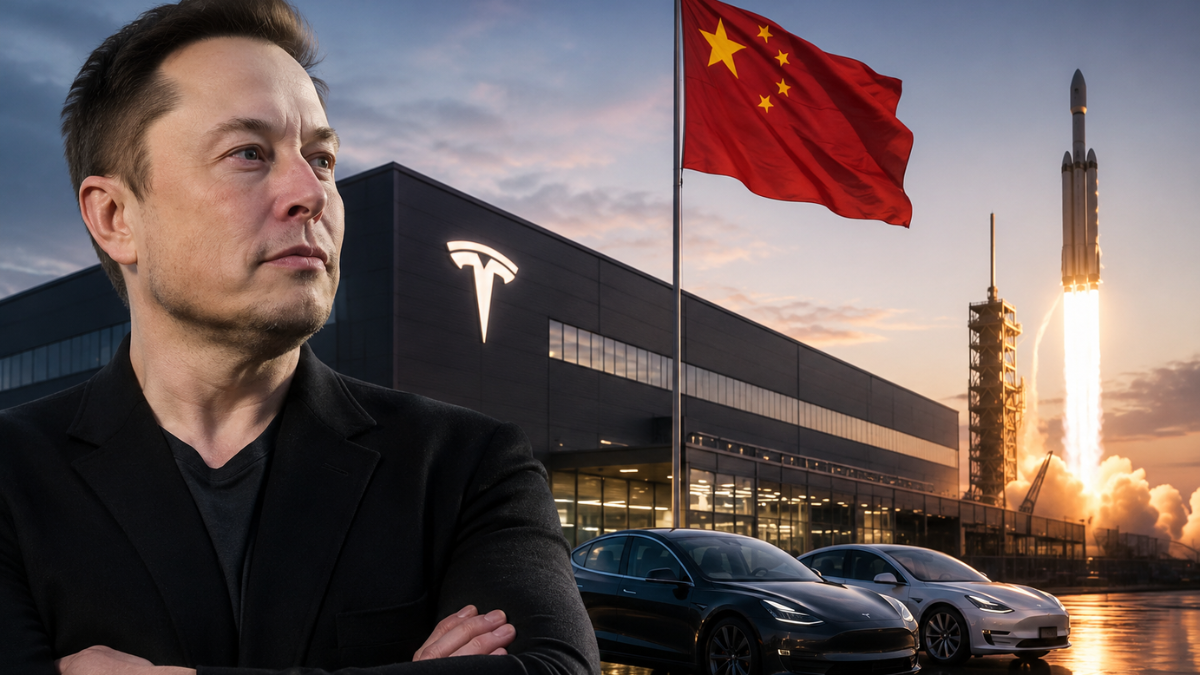
Elon Musk is walking a high-wire act that gets thinner by the day. As tensions flare between Washington and Beijing, Tesla is quietly erecting digital and operational walls to split its US operations from its massive business in China. The goal is simple: avoid getting crushed by crossfire. For years, Giga Shanghai served as the golden goose of Tesla's production empire, but that success now draws heavy fire from defense hawks in Washington. Rumors of a massive merger between Tesla and SpaceX designed to ease the administrative burden on the world's richest person are crashing headfirst into regulatory reality. Merging a vital US military defense contractor with a carmaker deeply reliant on Chinese supply chains is a geopolitical non-starter. Instead of a grand corporate marriage, we're witnessing a quiet, defensive partition. Tesla is building digital firewalls, locking down local databases, and keeping China-based staff away from sensitive global systems. It’s a survival play disguised as structural optimization, signaling a permanent rift in how tech giants must operate globally.
The Silo Strategy: Splitting Tesla in Two
Tesla didn't become an EV giant by playing it safe, but its reliance on China is turning into a massive liability. To keep Washington and Beijing happy, the carmaker is constructing a digital iron curtain. Over the past year, engineering teams have worked to split internal databases, severing direct lines between US headquarters and Giga Shanghai. This isn't just about protecting IP. It's about political survival. US lawmakers are growing more and more paranoid about where Tesla's self-driving data lands. Meanwhile, Beijing has made it clear that any data harvested on Chinese roads must stay on Chinese soil.
Firewalls and Local Databases
The solution was a quiet but radical overhaul. Tesla migrated its entire Chinese data operation to localized servers, effectively creating a sovereign digital bubble. Chinese engineers who once had unrestricted access to global autopilot repositories now find themselves locked out of sensitive global systems. This partition guarantees that US-designed AI models don't slip across the border, while protecting the massive treasure trove of driving data collected within China. It's a complicated, expensive way to run a business, but there's no other choice.
The Giga Shanghai Paradox
Giga Shanghai is the highlight of Tesla's manufacturing empire. It manufactured too many cars without delay, making Europe's factories relatively slow – which maintains high profit margins. The profitability of exporting, primarily to important markets, keeps a large proportion of Shanghai's output to global markets, illustrating Tesla's reliance on Chinese industrial capacity.
But the reliance is also problematic, as Beijing has been backing local companies-like BYD-to take the charge of smart vehicles for the upcoming revolution.
In the meantime, foreign automakers are racing to find friends in China. The U.S. Firms want to stay on top, but will have to be careful to not let people think that in China, they're just regular Chinese bidders, while on the one hand, they're real U.S. Companies.
The SpaceX Conundrum: Why a Merger is a National Security Nightmare
The merger between Tesla and SpaceX is a widely debated, long anticipated event for Tesla fans and tech commentators. Seemed like the ideal marriage in a Sci-Fi world. Two innovative technology companies run by the same innovative CEO and perhaps not too far apart in their investment in the same material science and engineering teams and facilities and operations.
SpaceX president Gwynne Shotwell casually floated the idea that a tighter corporate structure of the same type as Tesla's might make SpaceX easier to run and Musk's life easier.
But once you take this mystical union out of the corporate boardrooms and into the harsh geopolitical world, it quickly unravels.
Gwynne Shotwell's Comments vs. Wall Street Reality
Wall Street analysts, particularly at institutions like JPMorgan, have been highly skeptical of any structural combination. They point out that a merger would trigger a regulatory nightmare. The antitrust scrutiny alone would tie up both companies in court for years, not to mention the nightmarish tax liabilities of combining two massive, trillion-dollar-class enterprises. But the financial headache is nothing compared to the defense dilemma.
Defense Contracts and Chinese Manufacturing
SpaceX is not just a rocket firm. It is an essential part of the US military and surveillance network. The firm satellites are for national security; it operates the Starshield defense network, and has a bunch of classified Pentagon contracts.
Now try to convince the US Department of Defense that its main space launch provider is also a company with a wholly owned car manufacturing business, and whose manufacturing facilities were in the heart of Shanghai.
The security fears are too great. Washington would never allow an enterprise with such significant links to China's supply chains to have open access to SpaceX’s rocket technologies. The regulatory barrier between both industries is huge, and will remain so, even with the same head.
The Geopolitical Squeeze on Silicon
The division happening inside Tesla is just reflecting a larger, more painful fission shaping up across the entire technology ecosystem. The global silicon supply chain is coming apart just like that. Now, every chip, every battery is labeled with its country of origin, and the electric cold war between Washington and Beijing begins to demand that companies declare a partisanship or, like Tesla, start playing double lives.
AI, Self-Driving Chips, and Supply Chain Wars
By the time they get to the computing hardware, the battlefield is no longer of beefed-up cars but of artificial intelligence that drives them. As the US government is being very strict with export controls for the most advanced semiconductors, Beijing is not giving an inch. This resultant global chaos has led to a frantic rush for computing resources.
As Chinese firms are being barred from acquiring the latest US AI chips, they are now dependent on local suppliers to equip their future systems.
That means while Tesla can have its Autopilot team in the US using the absolute best hardware, its Chinese team has to contend with a jungle of barred, lower-tier parts and local solutions.
Navigating Regulatory Minefields
The split is eating into business at every corner. Even in the world of traditional semiconductor manufacturers, where a handful of players still dominate, each is fighting to hold onto its share, with U.S. and Chinese businesses signing long-term contracts before new tariffs or export bans spoil the party.
Logistics teams are meanwhile desperately trying to keep global supplies moving as trade rules switch back and forth.
The only sensible solution Tesla can think of is creating two physically separate silos-one for the US, the other for the Chinese side of the business. It is an ugly, costly workaround, but one that is hard to beat in a world in which the worlds of technology and geopolitics are hopelessly intertwined.