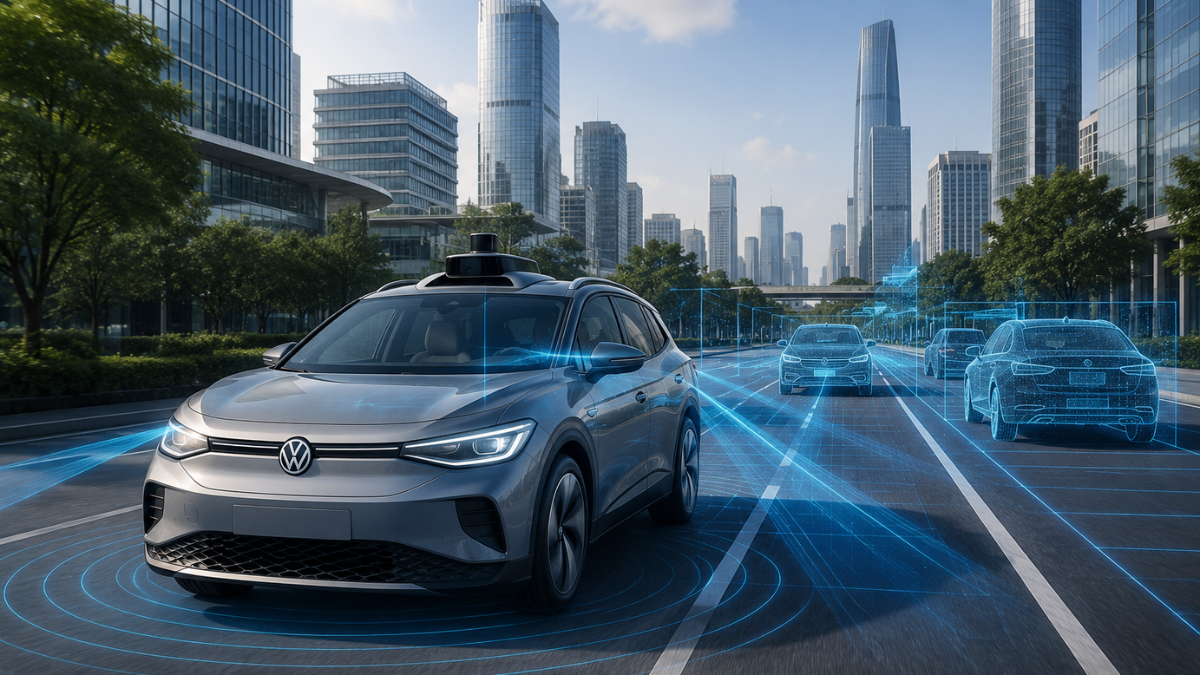
Volkswagen just gave everyone a clearer look at how it plans to compete in China's self-driving race. On Wednesday, the German automaker confirmed that CARIZON, its China-based automated driving unit, is deepening ties with Horizon Robotics (9660.HK). The Volkswagen CARIZON Horizon Robotics Partnership isn't a brand-new arrangement, but it's a meaningful expansion, one that pulls Volkswagen closer to Horizon's AI foundation model and, by extension, closer to actually shipping hands-free driving features on Chinese roads. Deliveries of Level 3 capabilities, where drivers can legally take their eyes off the road, are targeted for the second half of 2027.
That's the headline. There's more going on underneath it, though, and it says a lot about where the global auto industry is heading.
What the Volkswagen CARIZON Horizon Robotics Partnership Actually Covers
Here's the thing: this isn't just a licensing arrangement. Under the deepened deal, CARIZON gets direct access to Horizon Robotics' AI foundation model, the underlying system that processes sensor data, predicts road behavior, and makes split-second driving decisions. Volkswagen says this access lets it build its own AI driving solutions faster than developing everything in-house.
And "faster" matters more than it sounds. China's Level 3 autonomous driving market is moving quickly, with domestic players already testing hands-free systems on public roads. Volkswagen, a legacy automaker with legacy development timelines, needed a shortcut. Horizon Robotics gave it one.
The agreement also opens the door to Level 4 capabilities, the level where a vehicle can operate without any driver intervention at all in defined conditions. That's robotaxi territory. Volkswagen didn't commit to a robotaxi launch date, but the language in its statement was deliberate: Level 4 robotaxi development at Volkswagen China is now officially on the roadmap, not just a hypothetical.
When Will Volkswagen Launch Level 3 Self-Driving in China?
Second half of 2027. That's the number Volkswagen put on paper.
It's worth sitting with that timeline for a second. Level 3 systems, the kind that let you check your phone or read a book while the car handles a highway stretch, have been promised by multiple automakers for years now and have mostly slipped. Mercedes launched a limited Level 3 system in select markets. Honda did too. Volkswagen is entering this space in 2027 with the CARIZON automated driving unit. Volkswagen backing means it's arriving later than some rivals, but with a partner that already has deployment experience in China's regulatory environment.
Will the date hold? Hard to say. Autonomous driving timelines get pushed constantly, and 2027 is still a year and a half out.
From Eyes-Off to Robotaxis: Volkswagen's Level 4 Ambitions
Level 3 and Level 4 sound similar on paper, but they're worlds apart in practice. Level 3 still needs a human ready to take over. Level 4 doesn't, at least within a geofenced area or specific set of conditions. That distinction is exactly why robotaxis require Level 4, not Level 3.
Volkswagen leaning into Horizon Robotics' AI foundation model gives it a technical foundation that, in theory, scales from "driver can look away" to "there's no driver at all." Whether Volkswagen actually gets there on a competitive timeline is another question. Chinese robotaxi operators like Baidu's Apollo Go and WeRide already have paying passengers. Volkswagen is still building.
Why Oliver Blume Is Betting on China
CEO Oliver Blume framed the expanded deal plainly. The move, he said, would "reinforce our competitiveness in China, and open up new opportunities in selected international markets." Not exactly poetry, but it tells you what's driving this. Volkswagen's China sales have been under pressure from domestic EV makers for a few years now, and software, not just hardware, has become the battleground.
Volkswagen Oliver Blume’s China autonomous strategy boils down to this: partner with the companies that already understand the market instead of trying to out-build them. It's a pragmatic call, even if it means leaning on a Chinese AI supplier for a core piece of the driving experience.
The Silicon Race Volkswagen Is Stepping Into
None of this happens in a vacuum. China's self-driving chip and compute landscape is getting crowded fast. BYD recently unveiled its own advanced self-driving chip aimed squarely at reducing dependence on outside suppliers, and the broader automotive AI and car chip race has pulled in US chipmakers eager for a piece of China's EV market. Compute supply isn't unlimited either. Recent H200 chip purchase limits show just how tightly regulated advanced AI hardware has become for companies operating in China, which makes domestic partnerships like the one between CARIZON and Horizon Robotics feel less optional and more necessary.
China's Robotics Boom Isn't Just About Cars
Step back a bit and this deal fits a much bigger pattern. Chinese firms are racing ahead on embodied AI generally, not just autonomous driving. Zhiyuan Robotics recently hit a milestone in general-purpose embodied robot mass production, while other players are building out the embodied intelligence computing infrastructure needed to support it all. Regulators are keeping pace too, rolling out China's new humanoid robot ID rule so machines operating in public spaces can actually be tracked and accounted for. Even capital markets are responding, with Unitree Robotics IPO approval marking a turning point for how investors value the sector.
The Money and Policy Behind the Push
Investment is flowing in from unexpected directions, too. Local government-linked funds have built out diversified bets, including a robotics and EV charging investment portfolio that treats autonomous mobility as one piece of a larger infrastructure play. Wuhan alone has put a 1 billion yuan bet on AI agents, and national planners have released a China's AI industry growth forecast that expects double-digit growth through 2026. Talent competitions like the national AI agent competition are feeding a pipeline of engineers straight into companies like Horizon Robotics. And for businesses watching from outside China, there's growing interest in physical AI solutions for business as this technology matures beyond passenger cars.
Put together, the Volkswagen CARIZON Horizon Robotics Partnership looks less like an isolated automotive story and more like one automaker plugging into an ecosystem that's already moving at full speed.
Where This Leaves Volkswagen
Volkswagen isn't first to Level 3. It won't be first to Level 4 robotaxis either. But by deepening its relationship with Horizon Robotics, it's buying speed, market access, and a technical partner that already understands China's regulatory maze. Is that enough to close the gap with domestic rivals? Ask again in 2027, when those Level 3 deliveries are supposed to actually happen.
For now, the Volkswagen CARIZON Horizon Robotics Partnership stands as one of the clearer signals yet that European automakers are willing to lean hard on Chinese AI companies to stay relevant in the world's largest EV market.