Summary
The reported Xiaomi Xring O3 chip TSMC 3nm process launch signals a bigger ambition than simply releasing another phone processor. Xiaomi wants more control over the components inside its premium devices, especially as flagship phones become heavily dependent on AI, imaging, graphics, and battery efficiency.
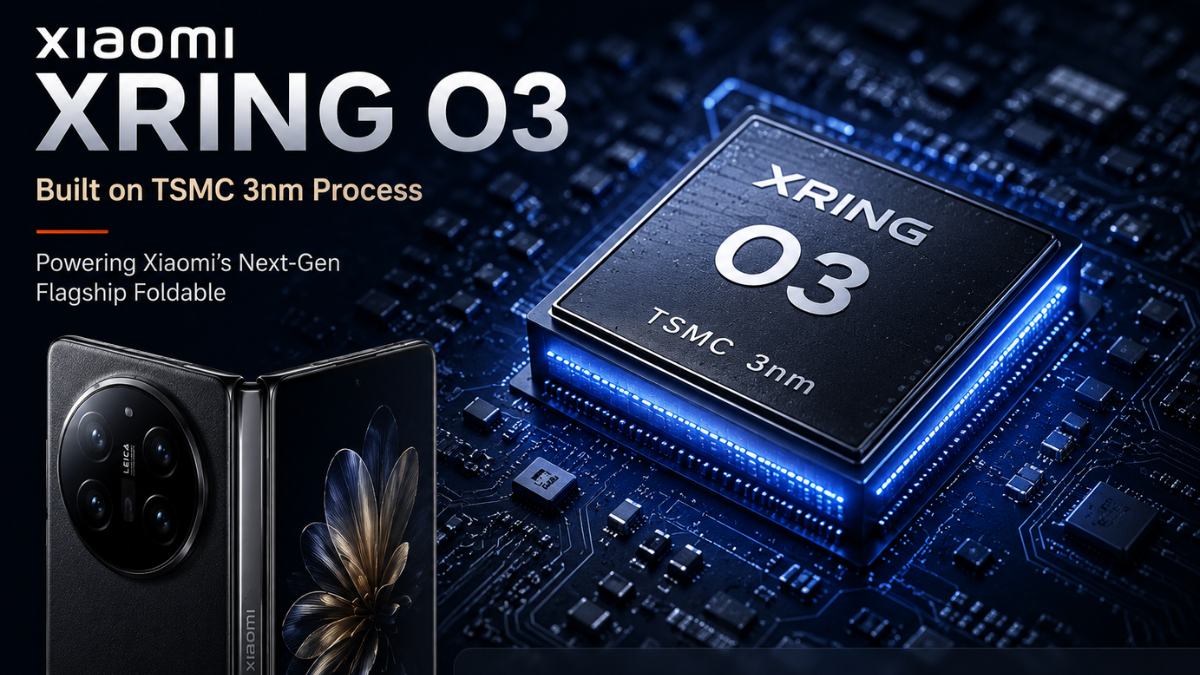
According to sources familiar with the plans, TSMC will manufacture the new chip on a 3-nanometre node, while Xiaomi is preparing it for an upcoming flagship foldable. That could put the company in a more exclusive club. Apple, Samsung, and Huawei have all invested heavily in their own silicon. Xiaomi appears determined to join them.
Key Points
- Xring O3 is reportedly being built on TSMC's 3nm process.
- The chip is expected to appear in a future Xiaomi flagship foldable.
- Xiaomi reportedly plans an initial production run of around 200,000–300,000 units.
- The project follows the Xring O1, Xiaomi's first proprietary smartphone processor launched in May 2025.
- Xiaomi says Xring O1 shipments have surpassed 1 million across smartphones, tablets and watches.
- The goal isn't to immediately replace Qualcomm or MediaTek across Xiaomi's portfolio.
- Custom silicon could give Xiaomi greater control over AI processing, cameras, power efficiency and hardware-software optimisation.
- TSMC manufacturing means Xiaomi would still depend on an external foundry for advanced chip production.
- The real test will be efficiency, sustained performance and reliability, not simply the 3nm specification.
- Bottom line: Xring O3 could be an important step toward Xiaomi having greater control over the technology inside its premium devices.
What the Xiaomi Xring O3 processor could bring to foldables
The Xiaomi Xring O3 processor TSMC 3-nanometre design is reportedly intended for a future high-end folding phone. That makes sense. Foldables have very little room for heat, power waste, or oversized components, so a more efficient chip can matter just as much as headline performance.
A system-on-chip, or SoC, combines the CPU, GPU, AI engine, image processing, connectivity, and other key functions into one component. Xiaomi can tune that package around its own hardware rather than relying entirely on a standard platform.
Reports suggest the Xiaomi Xring O3 flagship folding phone specs will center on premium performance and tighter power management, though Xiaomi has not publicly confirmed the final device or its full configuration. The company is reportedly aiming for 200,000 to 300,000 units, making the Xiaomi foldables 300000 shipment target ambitious but still relatively cautious for a first major flagship rollout.
Simple. Xiaomi is testing scale without betting the whole business on one new chip.
Xiaomi Xring O3 chip TSMC 3nm process launch and the production question
Who is manufacturing Xiaomi's Xring O3 processor? Sources cited in the original report say TSMC will produce it.
That matters because TSMC 3nm chip production Xiaomi Xring O3 would place the processor on one of the industry's most advanced commercial manufacturing processes. Smaller nodes can improve efficiency and pack more transistors into the same space, although the real-world result will depend on Xiaomi's design, software, cooling system, and modem choices.
The reported partnership also arrives while TSMC's 3nm expansion continues to shape where high-end chips can be made. These chips rely on difficult manufacturing steps, including advanced EUV lithography, and capacity is never a casual detail.
What manufacturing node process does the Xiaomi Xring O3 use? The sources say TSMC's 3-nanometre process, though Xiaomi and TSMC had not publicly confirmed the details at the time of reporting.
Why Xiaomi is building its own SoC
Why is Xiaomi developing its own proprietary SoC processors? Control. Not total control overnight, but more leverage over product timing, features, cost planning, and supply availability.
The Xiaomi in-house smartphone chip TSMC partnership could give Xiaomi more freedom to optimize its cameras, AI features, tablets, watches, and foldables around a shared architecture. It may also support Xiaomi custom chip supply chain independence when outside suppliers face shortages or prioritize other customers.
But there are real drawbacks. Designing a top-tier mobile chip costs a fortune, takes years, and leaves almost no room for mistakes. Qualcomm and MediaTek have deep modem expertise, mature software support, and enormous customer bases. Xiaomi won't replace them across its entire product line anytime soon.
Still, the Xiaomi Xring O3 vs Qualcomm Snapdragon MediaTek comparison is no longer hypothetical. Xiaomi is creating an alternative for at least some of its premium hardware.
From Xring O1 to Xring O3
When was Xiaomi's first proprietary Xring processor launched? The Xring O1 debuted in May 2025.
Xiaomi says Xiaomi Xring O1 cumulative shipments 1 million has been surpassed across smartphones, tablets, and watches. Sources also said roughly 150,000 Xring O1-based smartphones had been sold. Those are not Apple-scale numbers, obviously. Yet they show that Xiaomi has moved beyond a one-device experiment.
That progress gives more context to the Xiaomi Xring O3 chip TSMC 3nm process launch. The O3 is reportedly a follow-up built on early deployment data, not a standalone announcement pulled from nowhere.
You can also see why Xiaomi is pushing forward. Mobile AI technology signals increasingly point toward devices that need purpose-built local processing, while new concepts such as Honor's robot phone show how quickly phone makers are looking for new ways to stand apart.
Xiaomi joins Apple, Samsung, and Huawei in custom silicon
The Xiaomi proprietary SoC Apple Samsung Huawei rivalry is about more than benchmark scores. Apple designs chips to match iPhones and iOS. Samsung has long pursued Exynos alongside its broader semiconductor operation. Huawei's chip efforts have become strategically important amid trade restrictions.
Xiaomi joins Apple and Samsung in developing in-house smartphone SoCs, but its route is different. It remains dependent on outside foundry capacity and likely still needs Qualcomm and MediaTek for much of its portfolio. That said, its own processor can help it choose where to spend supplier dollars and where to keep valuable engineering in-house.
The wider backdrop is complicated. China's chip manufacturing push, China's record chip output, and global chip supply chains all affect the choices smartphone makers can make.
And competition won't ease. Samsung's future fab capacity and CXMT's semiconductor ambitions show just how many companies are chasing strategic chip influence.
What to watch next
The Xiaomi Xring O3 chip TSMC 3nm process launch will only become meaningful once Xiaomi confirms the device, publishes performance details, and proves that its software and thermal design hold up in daily use. A 3nm label sounds impressive. It isn't a guarantee of a better phone.
Still, Xiaomi's direction is clear enough. The company is using the Xring O1's early momentum to build a more independent premium-device strategy, starting with a reported flagship foldable and a targeted production run. If the Xiaomi Xring O3 chip TSMC 3nm process launch delivers on efficiency and reliability, Xiaomi could gain more negotiating power with suppliers while giving buyers another serious custom-silicon option.
GlobalByte Perspective
Xiaomi’s reported Xring O3 project is interesting because the company is moving from experimenting with its own chips to building a longer-term silicon strategy. The reported 3nm process and planned flagship foldable suggest Xiaomi wants tighter control over performance, power efficiency and how its hardware and software work together.
But the 3nm label alone shouldn't become the headline. What matters is what Xiaomi can actually deliver with it. A smaller manufacturing process can improve efficiency and transistor density, but the final experience still depends on architecture, cooling, software optimisation and modem performance.
The reported production target of 200,000 to 300,000 units also makes the project look more like a controlled expansion than an attempt to replace Qualcomm or MediaTek overnight. That's probably the sensible approach. Xiaomi can gather real-world data, improve its designs and gradually decide where proprietary silicon makes the most commercial sense.
For GlobalByte, the bigger story is Xiaomi's growing desire for silicon independence without completely abandoning the existing chip ecosystem. Apple has shown the advantage of controlling hardware and software together, while Samsung and Huawei have pursued their own semiconductor strategies for years. Xiaomi now appears to be building its own path.
If Xring O3 delivers meaningful gains in efficiency and reliability, the biggest win may not be a benchmark score. It could give Xiaomi more control over its flagship roadmap and stronger negotiating power with external chip suppliers.