Summary
If you're tracking the high-stakes chess game of modern machine learning, you've got to watch the tremors shaking Mountain View. Google's parent company, Alphabet, has announced a massive Google DeepMind leadership shakeup with Demis Hassabis stepping down as chief executive officer. Hassabis will transition into a newly designed role as Alphabet's Chief Scientist and DeepMind Chairman, handing over day-to-day operations to Koray Kavukcuoglu.
Meanwhile, an elite group of system pioneers, including Jeff Dean, Sanjay Ghemawat, Oriol Vinyals, and Quoc Le, are leaving the search giant to launch Discovery Loop, an independent public benefit startup. This unexpected executive exodus, combined with the lingering delays of the Gemini 4 model, has triggered a 4% drop in Alphabet's stock price. For your enterprise, this strategic shift signals a pivot away from long-term, academic research and a hard turn toward immediate product execution as Google fights off agile competitors. And fast.
Introduction & Core News Development
If you look closely at how tech giants manage their executive suites, structural shifts of this scale don't happen in a vacuum. Alphabet's sweeping reorganization of its AI division marks the official end of an era for Google's historically independent research culture. Demis Hassabis, who spent more than a decade running DeepMind as his own personal domain within the corporate parent, is stepping away from the daily grind of managing thousands of researchers. Few saw this coming.
Your understanding of this move requires looking closely at the raw numbers. The immediate market reaction wiped billions in value, dragging Alphabet's stock price down by 4%. Wall Street hates uncertainty. It hates it even more when the departure of legendary system architect Jeff Dean happens at the exact same time Google is struggling to push out its latest models.
Under this new structure, Koray Kavukcuoglu takes over day-to-day leadership as the Senior Vice President of Google DeepMind. He won't hold the CEO title. Instead, he will manage operations while serving as Alphabet's chief AI architect. That subtle title change is highly meaningful. It tells you that Google is actively flattening its research hierarchy to tie daily engineering milestones directly to its core revenue divisions.
Meanwhile, Hassabis will focus almost exclusively on long-term strategy and research concerning artificial general intelligence (AGI). He'll also devote more of his attention to Isomorphic Labs, DeepMind's commercial drug-discovery spin-out. It's a calculated attempt to free him from operational bottlenecks so he can chase the next generation of scientific breakthroughs. Hardly.
Google DeepMind leadership shakeup Demis Hassabis: the new structure
The biggest change is the Demis Hassabis Alphabet chief scientist role. Rather than managing DeepMind’s day-to-day operations, Hassabis will focus on artificial general intelligence research, long-term strategy, and the wider societal impact of increasingly capable AI systems.
He will also remain chairman of Google DeepMind and spend more time on Isomorphic Labs, the drug-discovery company he founded. His interest in cancer research fits that move. If AI can produce measurable medical breakthroughs, it gives the technology a far more tangible public purpose than another chatbot update.
But there’s a trade-off. Research-first leadership can clash with the urgent product demands of a company spending heavily on cloud infrastructure and consumer AI.
Google is already dealing with Google’s regulatory pressure, so it can’t treat its AI strategy as an isolated science project. Every major decision now lands in a business, legal, and public-policy context.
Who is the new head of Google DeepMind after Demis Hassabis?
Google DeepMind CEO Koray Kavukcuoglu will take on the lab’s operational leadership, although his title is senior vice president rather than CEO. He will continue in his role as Alphabet’s chief AI architect.
That distinction matters less than his actual remit. Kavukcuoglu is expected to push closer coordination between Google DeepMind and Google Cloud, where AI products need to produce revenue, retain enterprise customers, and justify enormous infrastructure costs.
The Koray Kavukcuoglu senior vice president Google DeepMind appointment signals a more product-oriented phase. Research still matters, obviously. Yet the company needs models that ship, work reliably, and show customers why Google Cloud is worth choosing.
Simple. Effective. Hard to pull off.
This also connects to the broader concern around Big Tech AI spending. The cost of training and serving advanced models is enormous, and investors increasingly want proof that spending leads somewhere.
Why did Jeff Dean and Sanjay Ghemawat leave Google?
The Jeff Dean leaves Google Discovery Loop startup story is arguably just as consequential as Hassabis’s transition. Dean, Sanjay Ghemawat, Oriol Vinyals, and Quoc Le are among the most respected technical leaders in Google’s modern history.
Their new venture, Discovery Loop AI startup Jeff Dean Sanjay Ghemawat, will focus on machine learning, science, and engineering breakthroughs. It is structured as a public benefit corporation and has reportedly received Google investment alongside a Google Cloud computing partnership.
So, what is Discovery Loop, the new AI startup founded by ex-Google engineers? It appears designed to pursue foundational research with more independence than a large public company can usually offer.
That freedom can be attractive. Big companies provide compute, data, and reach. Startups can move faster and choose stranger bets.
Google hasn’t lost its technical depth overnight. Still, the Jeff Dean Sanjay Ghemawat Oriol Vinyals Quoc Le leave Google development leaves a visible gap in institutional knowledge, especially around infrastructure and frontier model research.
Background & Industry Context
To understand how you arrived at this crossroads, you've to look back to 2023. That was the year Alphabet forced a shotgun wedding between two historically distinct, and often competitive, research teams: London-based DeepMind and Silicon Valley-based Google Brain. Here’s why.
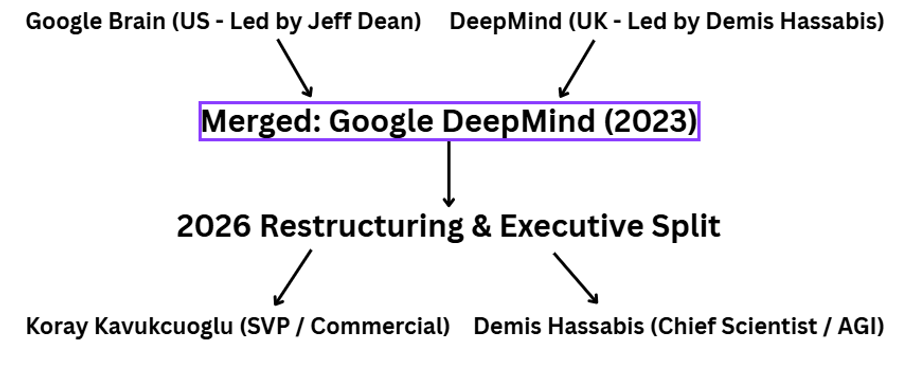
Figure 1: New James Webb Space Telescope findings suggest Neptune's largest moon, Triton, may have triggered a catastrophic collision billions of years ago, reshaping the planet's moons and ring system.
Google originally acquired DeepMind back in 2014 for around $650 million. For years, Hassabis managed to shield his division from commercial pressures, focusing on purely computer-science achievements like AlphaGo and AlphaFold. On the other side of the Atlantic, Jeff Dean co-founded Google Brain in 2011, building the distributed systems and software frameworks that keep Google's search and advertising engines running today.
The forced merger of these two units in 2023 was a reactionary survival play. OpenAI's sudden success with ChatGPT caught Alphabet completely off guard, forcing Sundar Pichai to consolidate his scattered research talent. But combining two distinct engineering cultures created deep internal friction. Case in point.
Insiders repeatedly pointed out that Hassabis prioritized academic prestige over product deadlines. If you look at his track record, his ultimate goal was winning a Nobel Prize, a milestone he achieved in 2024 alongside John Jumper. But while Hassabis chased academic glory, Google Cloud's sales representatives desperately needed production-ready models to compete with OpenAI and Anthropic in the enterprise market. This tension created a divide that could no longer be patched over with press releases. For more context on this topic, read our detailed guide on AI race.
Technical Breakdown & Architecture
You can't fully grasp this AI leadership shift without looking at the underlying machine learning architecture and the massive technical contributions of the departing team. Jeff Dean, Sanjay Ghemawat, Oriol Vinyals, and Quoc Le aren't just managers. They're the individuals who literally built the modern deep learning stack.
To appreciate why their departure is so significant, you need to understand the concepts they brought to life:
- Pre-training and Scaling Laws: In 2014, Oriol Vinyals and Quoc Le co-authored foundational papers with Ilya Sutskever establishing that scaling up data and compute would dramatically improve model capabilities. 2. Distributed Infrastructure: Jeff Dean and Sanjay Ghemawat built MapReduce and BigTable, the software architectures that allowed Google to scale its data processing across hundreds of thousands of commodity servers.
When you train a modern Gemini model, your systems rely on massive context windows and highly complex token economics. Google's current architecture uses Mixture-of-Experts (MoE) designs. Instead of activating the entire network for every single prompt, an MoE system routes queries to specialized subnetworks, saving massive amounts of compute. No doubt about it.
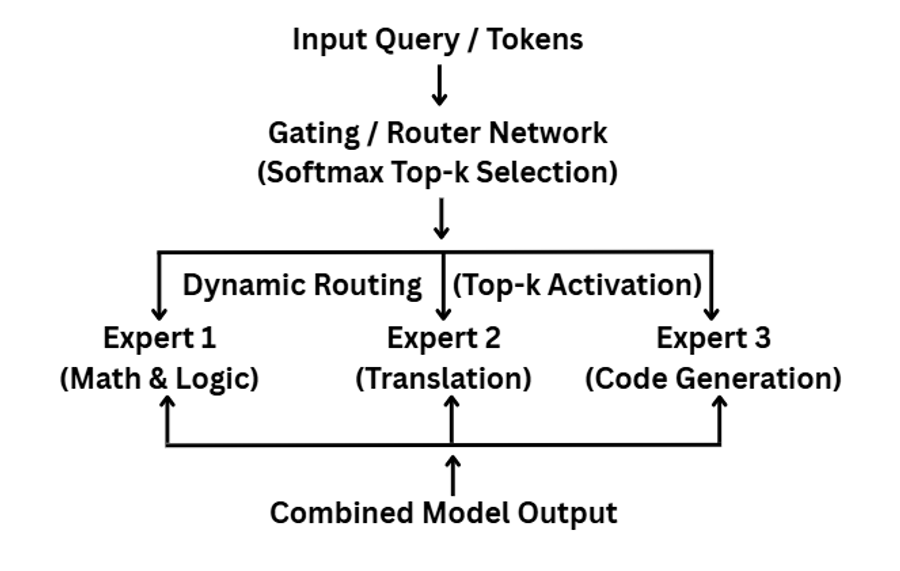
Figure 2: Architecture of a Mixture-of-Experts (MoE) system, demonstrating how a dynamic gating router directs incoming tokens to specialized sub-networks to reduce active parameters and compute overhead.
This structural complexity requires world-class systems engineering. When Jeff Dean and Sanjay Ghemawat walk out the door, they take decades of experience in optimization, compiler design, and hardware-software co-design with them. Their new startup, Discovery Loop, is structured as a public benefit corporation. They plan to focus on fundamental breakthroughs in machine learning, scientific computing, and engineering.
Your takeaway here's clear: Google is losing the very engineers who designed the software layers that run on their custom Tensor Processing Units (TPUs). That's a massive blow to their hardware-software co-design advantages. That’s just the start.
Business Impact & Strategic Implications
From a business perspective, this shakeup targets a major bottleneck in Google's commercial strategy. For quarters, Google Cloud customers have dealt with friction. The research lab was too insulated from the product teams, leading to delayed releases and missed market opportunities. Mind you, it wasn’t always this simple.
By putting Koray Kavukcuoglu in charge as Senior Vice President, Google is signaling a hard turn toward productization. Kavukcuoglu has historically worked closely with Google Cloud, helping translate raw research into APIs that enterprises can actually deploy.
If you analyze the financial trade-offs, this move plans to address mounting investor and industry concerns over Alphabet's massive capital expenditure. Google's hardware infrastructure is incredibly expensive to run. If the research team is spending billions of dollars on compute to train models that remain unreleased, the return on investment drops to zero.
The delay of Gemini 4 is a prime example of this issue. Originally planned for a June release, the model's delay has left Google and fast.
Gemini 4 delays add competitive pressure
The Google Gemini 4 release delay DeepMind brain drain concern has become harder to ignore because the leadership news overlaps with reports that Gemini 4 missed a planned June launch.
Google’s earlier Gemini releases narrowed the gap with leading rivals. But AI leadership is not static. One delayed release can change the conversation fast when competitors are shipping frequent improvements and developers have more options than ever.
You can see the competitive backdrop in ChatGPT’s market-share decline, which shows that even the market leader can lose ground. Google isn’t competing with one company. It’s competing with closed-model labs, smaller specialists, and open-source AI competition that is changing adoption patterns worldwide.
Then there’s the talent issue. The Google AI executive departures Anthropic OpenAI narrative gained weight after Noam Shazeer moved to OpenAI and John Jumper joined Anthropic. Losing well-known researchers doesn’t prove a company is failing, but it does make every release delay feel more serious.
What the DeepMind changes mean for Alphabet
This Google DeepMind leadership restructuring AGI transition 2026 is really about two different clocks running at once.
Hassabis is being positioned to think years ahead, especially about AGI and science. Kavukcuoglu is expected to help Google make its present-day AI products more commercially useful. Both jobs matter, but they pull attention in different directions.
Investors will watch whether the Alphabet stock price drop DeepMind executive departure becomes a short-term reaction or a longer concern. They’ll look for signs that Google Cloud can turn research into durable revenue, much like Microsoft’s Azure AI growth has become central to Microsoft’s AI story.
The stakes go beyond revenue. As models become more capable, companies also face mounting scrutiny around safety, misuse, and frontier AI risks. Policy is moving, too, with AI governance momentum becoming harder for labs to sidestep.
Meanwhile, the industry keeps moving. Anthropic’s trust crisis and Nvidia’s bet on SSI are reminders that every AI leader has its own pressure points. For Google, the next Gemini release and the stability of its remaining talent bench will matter more than the new org chart.