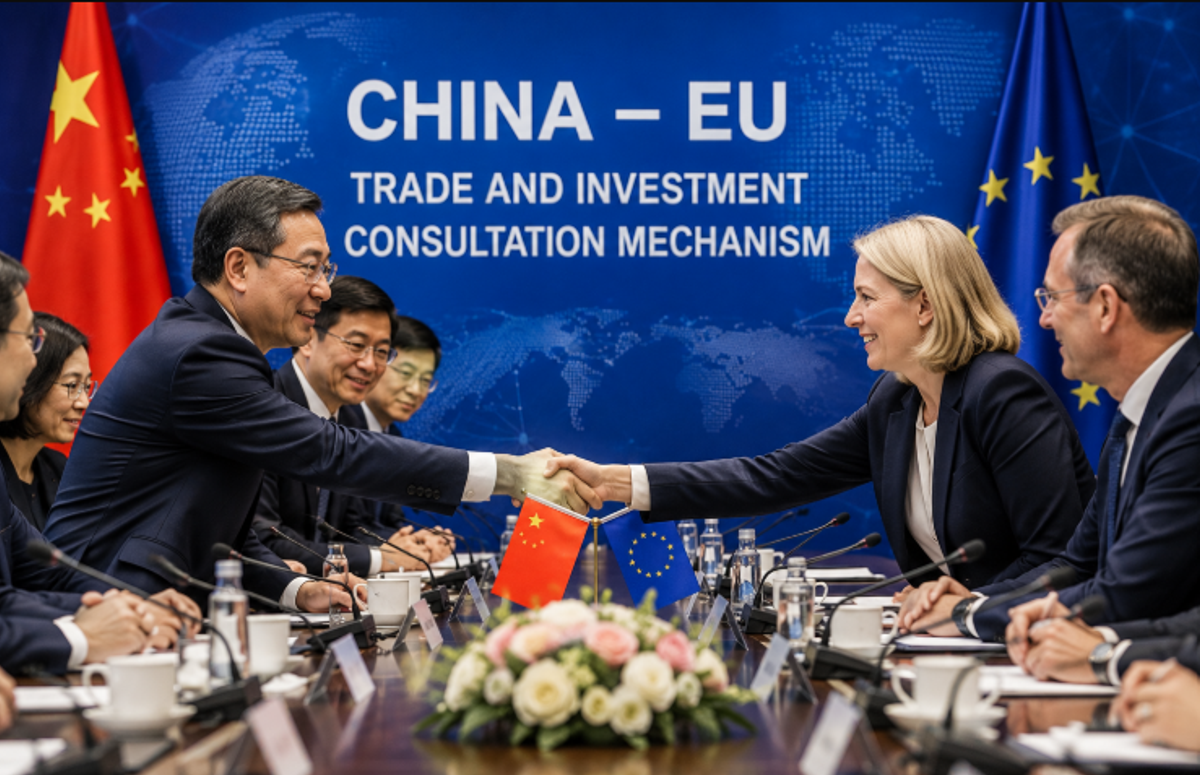
China and the EU aren't letting things slow down. Both sides have officially confirmed that the second China EU trade investment consultation mechanism meeting will take place this autumn, with European Commissioner for Trade and Economic Security Maros Šefčovič formally invited to visit Beijing for the session. This isn't just diplomatic scheduling - it's a signal that a newly built channel for dialogue is being taken seriously.
Ministry of Commerce spokesperson He Yadong confirmed the plans at a regular press conference on Thursday, giving the clearest public outline yet of what the mechanism is meant to do and what the first meeting actually produced.
What the China-EU Trade Investment Consultation Mechanism Actually Is
The mechanism is a recently established regular dialogue platform for bilateral economic and trade exchanges. Its core structure: one or two ministerial-level meetings each year. Simple.
But the simplicity is the point. China and the EU have historically navigated trade tensions through ad-hoc diplomacy, WTO proceedings, and bilateral friction that sometimes took years to resolve. A dedicated, recurring mechanism changes that dynamic. It creates a channel for working through issues before they escalate, rather than after.
It's a model gaining traction across Asia's biggest trade relationships. Discussions around China UK trade cooperation have moved in the same direction - toward open, structured frameworks rather than reactive crisis management.
Three Priorities from the First Meeting
He Yadong outlined three focus areas from the inaugural session, and each one reveals where both sides see genuine room to move.
Balanced growth, not trade reduction: Both sides explicitly agreed to pursue more balanced growth in bilateral trade rather than reducing trade to achieve balance. That framing is deliberate. It signals that neither party is looking to shrink the relationship - they're looking to reshape it. For a pairing where the EU has been running significant trade deficits with China, that distinction carries real weight.
Cooperation in emerging sectors: Specifically, artificial intelligence and the green transition. Both areas are moving faster than most trade frameworks can track. Given that China’s open-source AI rivalry with Western platforms is already reshaping global market dynamics, having a direct bilateral channel for AI cooperation is more consequential than it might look on paper.
Advancing market access consultations: The goal is to gradually address each other's concerns. Gradually isn't a hedge here - it's an honest read of how these processes actually work. Anyone who's watched China-EU negotiations knows that overnight fixes don't happen. What matters is that both sides committed to a channel, not a deadline.
Services trade also came up, flagged as an area with significant untapped potential. It tends to get overshadowed by the goods-and-tariffs headlines, but the real opportunity may sit there.
The New Label for the Relationship - and What It Rules Out
Here's where the first meeting produced something genuinely notable. Both sides reached a consensus on a new characterization of China-EU economic and trade relations, agreeing that China and the EU are each other's "stable and balanced key trading partners."
That's easy to skim past as diplomatic language. Don't.
He Yadong was specific: this consensus is designed to improve expectations among businesses on both sides and inject greater certainty and positive momentum into global economic development. For companies making cross-border planning decisions, a shared definition of what this relationship is - and what it isn't heading toward - reduces uncertainty in concrete ways. It doesn't fix everything. But it rules out some of the worst-case scenarios that businesses have been quietly pricing into their decisions.
Given how turbulent global startup investment trends have become, that kind of anchor has real commercial value.
Why Šefčovič Is Visiting for the Second Mechanism Meeting
China has formally invited European Commissioner Maros Šefčovič - who holds the Trade and Economic Security portfolio alongside Interinstitutional Relations and Transparency responsibilities - to visit Beijing this autumn for the second China EU trade investment consultation mechanism meeting.
Ministerial-level engagement is not a small thing. It means both sides have committed senior political capital to making this session happen. It's not a technical working group. Not a mid-level delegation. When the Trade Commissioner travels to Beijing, the runway has been cleared.
That said, the visit won't be without friction. Cybersecurity in trade policy has become an increasingly live issue in EU-China negotiations, and it's likely to surface alongside the headline topics of AI, green transition, and market access.
Technology Cooperation: Bigger Than the Agenda Suggests
The explicit focus on AI and the green transition reflects something real about where both economies are placing their bets right now. These aren't abstract future sectors.
China AI investment deals are already reshaping how the country sources and deploys compute infrastructure - and that has direct implications for how European companies can engage with Chinese AI suppliers and platforms. Any cooperation framework built at the autumn session will need to reckon with that technical reality on the ground.
The 2026 digital economy expo makes clear just how quickly AI and tech advances become trade-relevant - policy is always running slightly behind the technology. And China's broader frontier science momentum keeps expanding the context. From China marine satellite launch milestones to China quantum tech rollout announcements, the technological backdrop surrounding these trade talks keeps getting more complex. Whether those areas appear on the formal agenda or not, they shape what "cooperation" actually means in practice.
So what does that mean for the autumn talks? A lot will depend on how specifically both sides are willing to go.
What to Watch This Autumn
The confirmation of the second China-EU trade investment consultation mechanism meeting is understated news that deserves more attention than it's getting. Structured bilateral dialogues rarely generate headlines, but they're often where the practical groundwork gets laid.
Both sides are arriving with real issues on the table - unresolved market access concerns, AI cooperation that needs careful framing, and green transition dynamics that cut both ways. None of it is easy. Šefčovič's visit will be closely watched not just for what gets agreed, but for what gets tabled, what gets deferred, and what doesn't appear on the agenda at all.
But here's what's already true: the platform exists, it's meeting, and both sides have put a formal name to what they are to each other. In a global trade environment defined by uncertainty, that's a start worth watching.