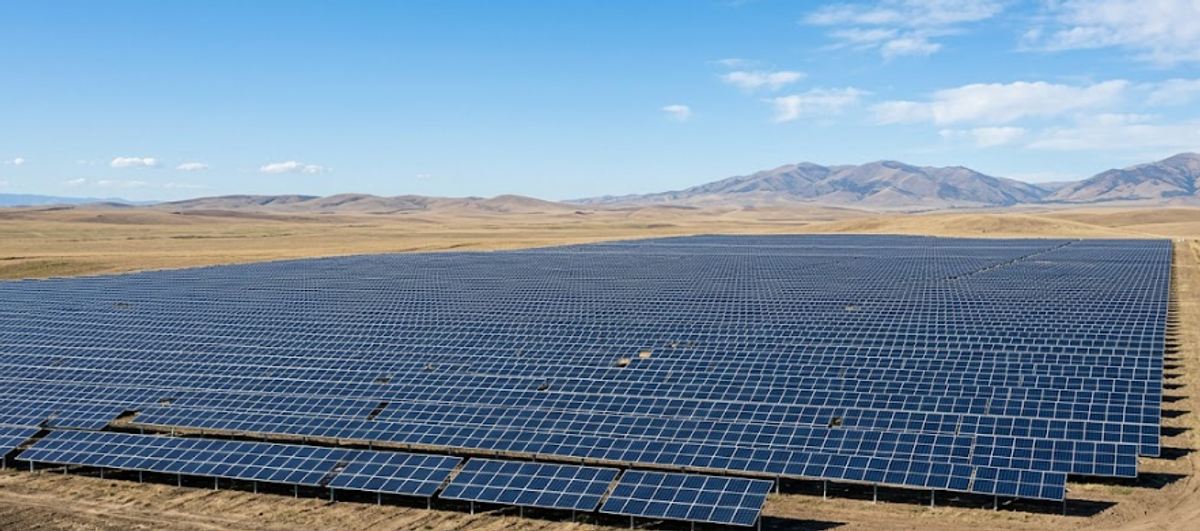
China has done something that's been theorized, debated, and piloted in fragments for years. The country's first AI data center powered by a 100% direct green electricity connection is now operational in Zhongwei, Ningxia Hui Autonomous Region. No carbon offsets. No grid averaging. Just wind-sourced power flowing directly into high-demand computing hardware at commercial scale.
If you've been tracking China's AI growth over the past few years, this one lands differently than most green announcements. It has operating numbers behind it.
Why Zhongwei Was Chosen for China's First Green Electricity AI Data Center
A decade ago, this was a sparsely developed desert city. Today, it's home to 10 large-scale data center parks with approximately 3.31 million standard server racks running 24/7. Six of China's top 10 computing service providers now have operations there.
The reason comes down to resources. Wind. Solar. Land. Ningxia has all three in abundance, making it ideal for renewable energy at the scale AI computing demands. The Zhongwei Ningxia green power data center launch is the product of years of coordinated investment under China's "Eastern Data, Western Computing" policy initiative - which deliberately routes data-intensive workloads to western regions rich in clean energy.
That combination of cheap power, open land, and high-speed connectivity back to eastern cities turned this desert city into one of China's most active computing hubs. And it's still accelerating.
How the Direct Green Electricity Model Actually Works
This isn't buying renewable energy credits and relabeling the facility.
The data center uses a direct physical connection to wind farm generation, meaning the electrons powering its servers genuinely come from clean sources - not from a regional grid that blends coal, gas, and renewables in unpredictable ratios. That's what separates direct renewable power supply data center models from softer "green" claims you see elsewhere.
Combined with high-efficiency liquid cooling technology servers, the facility achieves a Power Usage Effectiveness (PUE) of 1.15, per China Telecom Ningxia Branch. Conventional data centers typically run at 1.4 to 1.6. Understanding Power Usage Effectiveness PUE in data centers reveals that every decimal above 1.0 represents wasted overhead energy, so 1.15 is a genuinely strong result for a facility running intensive AI workloads.
"The combination of high-efficiency liquid cooling and direct renewable power supply enables us to lower electricity consumption while delivering 100 percent green power to the facility," said Wang Fang, deputy general manager of the Computing Operations Company of China Telecom Ningxia Branch.
The wind powered liquid cooling data center standard being established here matters because AI model training is energy-intensive by definition. Running it on direct green power changes the math on cost and carbon at the same time.
Eastern Data, Western Computing: The Policy Engine Behind It
The Eastern Data Western Computing national strategy is designed to serve two goals simultaneously: develop western regions economically and cut the environmental cost of running AI infrastructure.
This facility shows that model working as intended. It's also telling you something about how Chinese AI companies are approaching sustainability - not as optics, but as an operational necessity as electricity costs for large-scale AI training keep climbing.
Zhongwei has direct high-speed network connections to more than 20 major cities including Beijing, Shanghai, Guangzhou, and Shenzhen. The Zhongwei to Shenzhen high-speed network connection is strong enough to support real-time AI workloads, which is what makes data-intensive workloads shifting to western regions commercially viable rather than just theoretically appealing.
The Supply Chain Effect Nobody's Talking About
When a facility like this comes online, it doesn't just consume technology. It creates demand for it.
If you've followed the CISCE AI exhibition highlights from recent months, the appetite for sustainable AI infrastructure across the hardware supply chain is clearly building. Liquid cooling equipment demand for AI servers is climbing sharply, and projects like this drive that further upstream - into chipmakers, cooling manufacturers, fiber suppliers. The top computing service providers in Zhongwei aren't just there for land subsidies. The infrastructure model fits their operational needs in a way that generic data center parks don't.
There's a competitive angle here too. Looking at global AI unicorn rankings, renewable energy integration with computing infrastructure is increasingly a differentiator for companies, not just a compliance checkbox. And the Lingsheng supercomputer ranking achievement this year is partly downstream of exactly the kind of infrastructure investment this facility represents. These things compound over time.
Is the "Zero Carbon" Claim Actually Real Here?
Look, skepticism is fair when large infrastructure projects use green language.
But this one has specifics you can examine. A 1.15 PUE is a published, verifiable number. A direct renewable connection is a physical infrastructure decision, not a certificate. The location in Ningxia was chosen specifically for wind and solar resource availability - this isn't a facility in a coal-heavy grid region buying offsets.
China's China fusion reactor records earlier this year suggested serious investment in clean energy at a foundational level. This data center operates on the same logic: build western renewable capacity, route it directly to high-value computing users. And as the MWC Shanghai AI economy conversations made clear, facilities that combine low latency with clean power have a structural long-term advantage as zero carbon digital economy development trends tighten regulatory and cost pressure on conventional data centers.
The model scales if renewable capacity in the west keeps expanding and network infrastructure keeps closing latency gaps. Both trends are moving in the right direction. But that's the part to watch.
Zhongwei Just Changed the Question
The China first green electricity AI data center operating in Zhongwei doesn't just mark a national first. It's a working answer to a question the industry has been circling: can AI infrastructure at commercial scale actually run on 100% renewable power without sacrificing performance or efficiency? Based on the published numbers, yes.
The sustainable AI infrastructure technology supply chain and the low carbon transition pillars for digital economy aren't abstract targets here - they're operational data from a running facility. Whether the model spreads widely depends on how fast renewable capacity and network infrastructure expand in the west. Both are moving in the right direction.
For the latest developments in AI infrastructure as this space evolves, the AI category news section covers it as things move.