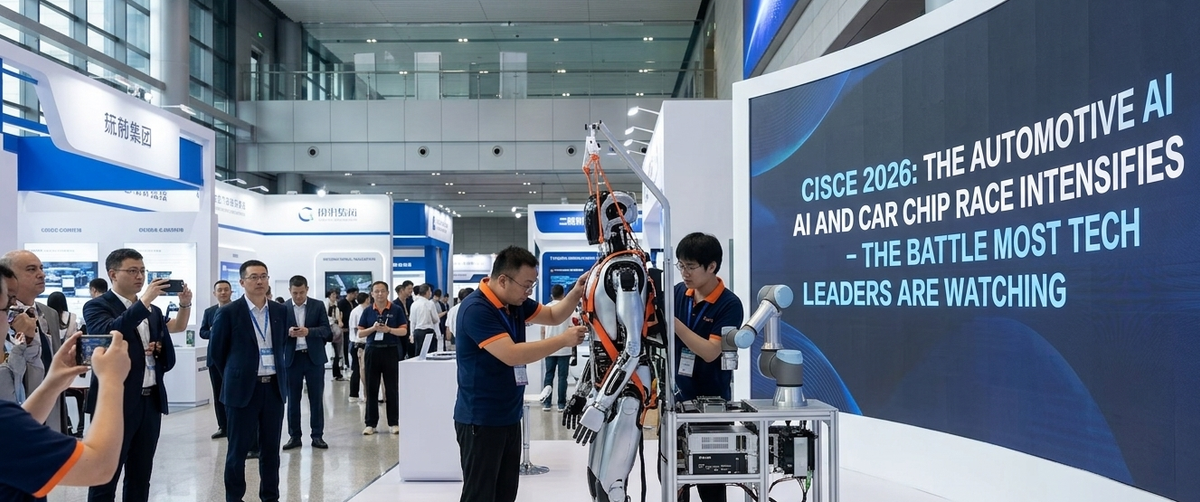
The 4th CISCE Artificial Intelligence exhibition zone highlights have been making rounds in tech and trade circles since the expo wrapped in Beijing - and honestly, for good reason. This year marked something genuinely new: a dedicated AI zone, introduced for the first time in CISCE's history. The 4th China International Supply Chain Expo is already notable as the world's first national-level expo built around a supply chain theme. Adding an entire AI ecosystem showcase to that changed the character of the event noticeably.
Embedded robots. Foundation models. Smart computing platforms. Industrial AI covering everything from data collection to large-scale commercial deployment. That's what the AI zone at the 4th CISCE 2026 actually looked like on the floor.
Here's what stood out.
NVIDIA's Booth: The One Nobody Could Walk Past
The NVIDIA booth at China International Supply Chain Expo 2026 was, by most accounts, the busiest spot on the floor. Constantly packed. The company brought its entire AI technology stack - chips, energy components, infrastructure, AI models, and application services - and demonstrated how each layer connects to the next.
And that "end-to-end" framing mattered. For anyone evaluating B2B AI computing infrastructure supply chain trends 2026, a live demonstration like that is hard to replace with a slide deck. You could watch the stack work together in real time, which changes the conversation from theoretical to operational.
Chinese AI companies circling the NVIDIA booth weren't just browsing. The conversations there were strategic - about integration timelines, deployment readiness, and what's actually shipping now versus what's still on the roadmap. nvidia cisce highlights this year confirmed one thing: the full-stack play is what serious enterprise buyers want to see.
Qualcomm and China's Device Ecosystem: Closer Than You Might Think
Qualcomm device integration with Chinese tech companies at CISCE was one of the more underreported stories of the expo. The company showed up alongside Honor, Xiaomi, Vivo, OPPO, ASUS, and Lenovo, demonstrating smartphones, AI glasses, and a range of edge AI devices. Not as a standalone showcase. As a coordinated joint demonstration.
Chen Kun, Qualcomm's Senior VP of Global Operations, has attended every CISCE since the event launched. Four years running. He described the expo as "an important window to showcase the achievements of industrial chain cooperation" and "an excellent platform to explore opportunities for smart development" with partners. That's not marketing language - it's a deliberate signal that device-level AI integration is where Qualcomm is placing its weight.
Qualcomm smart development partnerships at this depth have a compounding effect as edge AI matures. The brands Qualcomm brought along aren't small players - they're among the highest-volume device manufacturers on the planet. Getting AI baked in at the hardware level, with partners like these, is a different kind of competitive position.
This also feeds directly into the broader CISCE automotive AI wave unfolding at the same expo - chip and device ecosystems don't exist in isolation from the EV and automotive sectors competing for the same silicon.
Intel's Quiet Case for Infrastructure Investment
Intel liquid cooling technology for AI computing infrastructure wasn't the headline anyone expected from the Intel booth. But it turned out to be one of the more telling signals of the event. Demand at CISCE wasn't just for next-generation AI chips - it spanned circuit boards, power components, and thermal management systems.
That matters because AI workloads generate serious heat loads, and data centers are running into physical limits. Intel AI infrastructure demonstrations at the expo pointed to a real bottleneck: you can have the most capable model in the world, but if your infrastructure can't handle the thermal demands, deployment stalls. Accelerating AI applications across industries means accelerating demand for everything that supports those applications too.
If you're sourcing in the B2B semiconductor supply chain space, this is the part of the picture that often gets skipped. MWC26 Shanghai AI economy coverage told the same story from a different angle - compute demand is running ahead of infrastructure readiness, and the gap is a real business problem.
The Hangzhou Delegation Was Quietly the Best Thing There
Seventeen companies. Roughly 700 square meters. And a range of tech spanning embedded robots, foundation models, AI agents, healthcare applications, smart computing platforms, smart disaster prevention systems, and commercial aerospace.
The Hangzhou AI delegation embedded robots and foundation models showcase wasn't a city putting on a display - it was a city making a statement. Hangzhou AI foundation models on the floor included capabilities that were genuinely research-stage two years ago. Now they're being pitched to procurement teams and global supply chain partners. That shift - from lab to commercial deployment - is exactly what embedded robots commercialization looks like in practice.
Regional clusters like this don't form by accident (which, if you've been watching China's tech geography over the last few years, you already know). Xiongan high-tech startup funding offers a comparable model for how government support infrastructure shapes these ecosystems - same general playbook, different geography.
Why the CISCE AI Exhibition Zone Matters Beyond the Expo Floor
The 4th CISCE Artificial Intelligence exhibition zone highlights aren't just a recap of impressive demos. They're a map of where global industrial chains are being restructured.
Smart development and industrial chain cooperation platforms are going AI-native, faster than most forecasts suggested. Physical AI solutions are no longer a future-state conversation - CISCE 2026 put commercially deployable technology in front of buyers and global partners in a format that moves the discussion from "if" to "which vendor and when."
The policy layer driving all of this runs deep. China's innovation blueprint - as detailed at Summer Davos - puts the supply chain AI push in its full economic context. The expo is the visible surface. The structural shift goes much further.
A New Baseline for Global AI Supply Chains
The 4th CISCE Artificial Intelligence exhibition zone highlights, taken together, tell a clear story. AI isn't being layered onto global supply chains as an optional feature - it's becoming the operating layer. NVIDIA demonstrated full-stack capability. Qualcomm showed deep device partnerships with Chinese manufacturers. Intel made the infrastructure investment case quietly but directly. Hangzhou arrived with seventeen companies and left having made a regional statement.
The global industrial chains being rebuilt around AI capability right now will shape who competes effectively over the next decade. CISCE is one of the clearest places where that build-out becomes visible. The AI zone that debuted this year isn't going anywhere - it's only going to grow.