Summary
China high tech high value exports mechanical electrical products are doing much of the heavy lifting in global trade this year. These numbers are enormous, but behind them lies an even more interesting story: artificial intelligence servers, industrial robots, batteries, chips, transformers, and an increasingly complex cross-border transportation supply chain.
China’s foreign trade reached 30.13 trillion yuan in the first seven months of 2026, up 17.3% year on year, according to the General Administration of Customs China trade statistics. Exports rose 14 percent to 17.44 trillion yuan, while imports climbed 22 percent to 12.69 trillion yuan.
That isn’t just a volume story. It’s a shift in what China sells.
Key Points
- China’s foreign trade reached 30.13 trillion yuan in the first seven months of 2026, up 17.3% year over year.
- Exports rose 14% to 17.44 trillion yuan, while imports increased 22% to 12.69 trillion yuan.
- Mechanical and electrical products reached 11.12 trillion yuan, up 21.2% and accounting for 63.8% of total exports.
- AI servers, industrial robots, lithium batteries and advanced electronics are becoming important export growth areas.
- Chinese manufacturers are increasingly competing through technology, product quality and delivery reliability, rather than price alone.
- Rising imports of industrial inputs suggest that domestic manufacturing activity and demand are also strengthening.
- China’s trade with the U.S. remains under pressure, but July bilateral trade grew 10.8% year over year, marking the fourth consecutive month of growth.
- Southeast Asia is becoming an important part of China’s semiconductor and advanced manufacturing supply chains.
- Power-grid upgrades overseas are creating additional demand for Chinese transformers and electrical equipment.
- The bigger shift is structural: China is exporting more complex products and the supply chains behind them, making its manufacturing base harder to separate from global industrial production.
China high tech high value exports mechanical and electrical products lead the mix
Mechanical and electrical exports reached 11.12 trillion yuan from January through July, growing 21.2 percent year on year. Put another way, mechanical and electrical exports account for nearly 64 percent of total Chinese exports.
This helps explain why China's exports have continued to grow despite continued instability for manufacturers due to tariffs, shipping costs and geopolitical risks. Low-cost goods still matter, of course. But high-value products often provide buyers with a strong reason to stick with a supplier.
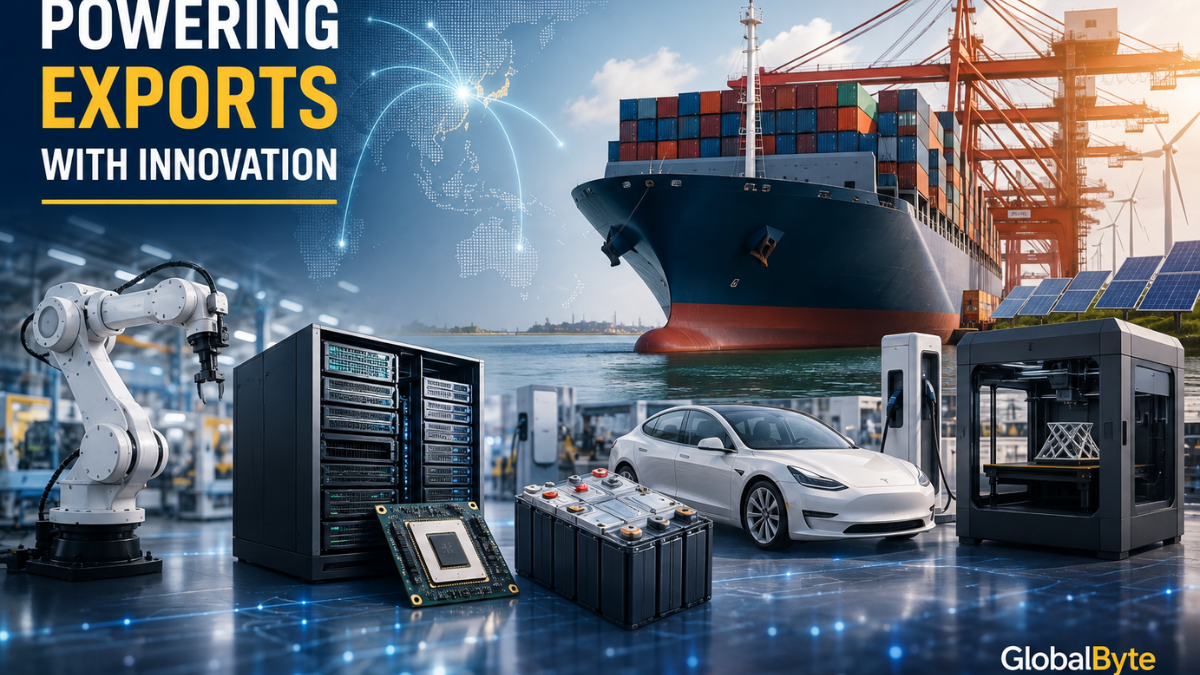
AI hardware industrial robots and lithium batteries emerge as primary growth engines. This includes AI servers, 3D printers, advanced electronics, industrial automation equipment, and clean energy components.
Simple. Effective. And much harder to replace overnight.
Why China’s high-value mechanical and electrical exports are growing
What is driving China's export growth in 2026? Demand is coming from two directions at once: Companies are spending on AI capabilities and factory automation, while governments and powerful companies are investing in electrification, grids and energy storage.
The AI computing supply chain is especially relevant here. Servers need chips, packaging substrates, printed circuit boards, power systems, cooling equipment, and final assembly. One large AI investment can create demand across several export categories.
And heat management is no side issue. Rising demand for Chinese cooling exports shows how data centers and industrial facilities are pulling in supporting equipment alongside computing hardware.
This is part of a broader global trade structural upgrade advanced manufacturing trend. Buyers are looking for products that solve practical problems, not simply the cheapest item on a procurement list.
AI, green goods, and factories moving up the value chain
China’s trade structure shifts toward high value sustainable manufacturing as manufacturers build more technical capability into their products. You can see it in the rise of AI hardware servers industrial robots export growth, but also in China electric vehicles semiconductor packaging trade.
The automotive AI exports story overlaps with the wider EV supply chain. Vehicles now depend on batteries, sensors, chips, software, control systems, and power electronics. That means an export order can support a surprisingly wide production network.
High density packaging substrates and advanced chips strengthen global supply chains, too. One Guangzhou-based substrate manufacturer, for example, has established supply channels in Southeast Asia, where its ultrathin circuit boards are assembled into advanced semiconductor components. That’s Southeast Asia semiconductor supply chain integration in action.
The growth of Chinese AI chips and AI infrastructure growth makes this network even more significant.
Transformers, batteries, and the quality question
China lithium batteries power transformers export surge is another clear signal. Power grid upgrades across global markets double Chinese transformer exports in some cases, including one Qingdao manufacturer whose overseas sales rose 100 percent year on year to 120 million yuan in the first seven months.
Why are buyers choosing these products? Price still counts. But quality, technical specifications, and dependable delivery now matter just as much.
Why quality and technology are replacing price as key strengths in Chinese exports comes down to customer risk. A transformer failure, a late battery shipment, or an unreliable component can disrupt an entire project. High tech green goods withstand global market volatility and trade frictions better when customers trust the supplier’s engineering and service.
That said, manufacturers still face higher transport costs and potential energy-price shocks. Persistent disruption in the Middle East remains a real problem for shipping routes.
Imports reveal another side of China’s trade growth
Why did China's imports surge by 22 percent in 2026? Rising domestic consumption drives 22 percent import growth in China, alongside stronger industrial activity and investment. Businesses are also bringing in more industrial inputs for production.
That matters because China import surge industrial inputs domestic demand suggests the export story is not operating in isolation. More imports can mean more factories running, more components moving through supply chains, and more confidence among buyers.
Recent China’s manufacturing PMI data offers useful context, while the country’s industrial internet transition points to the digital systems helping factories become more connected and productive.
China-US trade shows signs of recovery
China US trade recovery 10.8 percent July growth is one of the more closely watched developments in the data. Bilateral trade fell 1.6 percent in the first seven months, but that was an improvement from the 3.6 percent decline seen in the first half.
In July alone, China US trade rebounds with 10.8 percent year on year increase in July, marking a fourth consecutive month of growth.
It’s encouraging, though hardly a reason to ignore the underlying tensions. Tariffs and technology controls still shape commercial decisions. High-value products may be more resilient, but they aren’t immune.
What China’s trade data means for global buyers
China high tech high value exports mechanical electrical products are increasingly tied to international production, rather than moving from one country to another in a simple straight line. Components may be made in China, assembled in Southeast Asia, and sold into Europe, North America, Africa, or the Middle East.
For you as a buyer, this means supplier evaluation needs to go beyond unit cost. Look at technical capacity, component sourcing, delivery history, export compliance, and after-sales support. The tech-led economic resilience theme is really about that capability becoming more durable over time.
GlobalByte Perspective
China’s latest trade figures tell a more interesting story than simply another record for exports. The bigger change is in what China is exporting. AI servers, industrial robots, lithium batteries, transformers, semiconductor components and other technology-heavy products are taking a larger role in the country’s overseas trade.
Mechanical and electrical products alone reached 11.12 trillion yuan in the first seven months of 2026, up 21.2% from a year earlier. That means these products now make up nearly 64% of China’s total exports. For GlobalByte News, this is one of the clearest signs that China’s export strength is increasingly tied to manufacturing capability and technology rather than low-cost production alone.
The other important point is that China’s trade network is becoming more interconnected. A semiconductor component may start with a Chinese manufacturer, move to Southeast Asia for assembly, and eventually reach customers in Europe, the Middle East or North America. The same applies to batteries, electronics, power equipment and AI infrastructure.
There are still risks of higher shipping and energy costs, trade restrictions and geopolitical tensions can put pressure on exporters. But the latest numbers suggest Chinese manufacturers have become better equipped to compete on technology, quality and delivery, not just price.