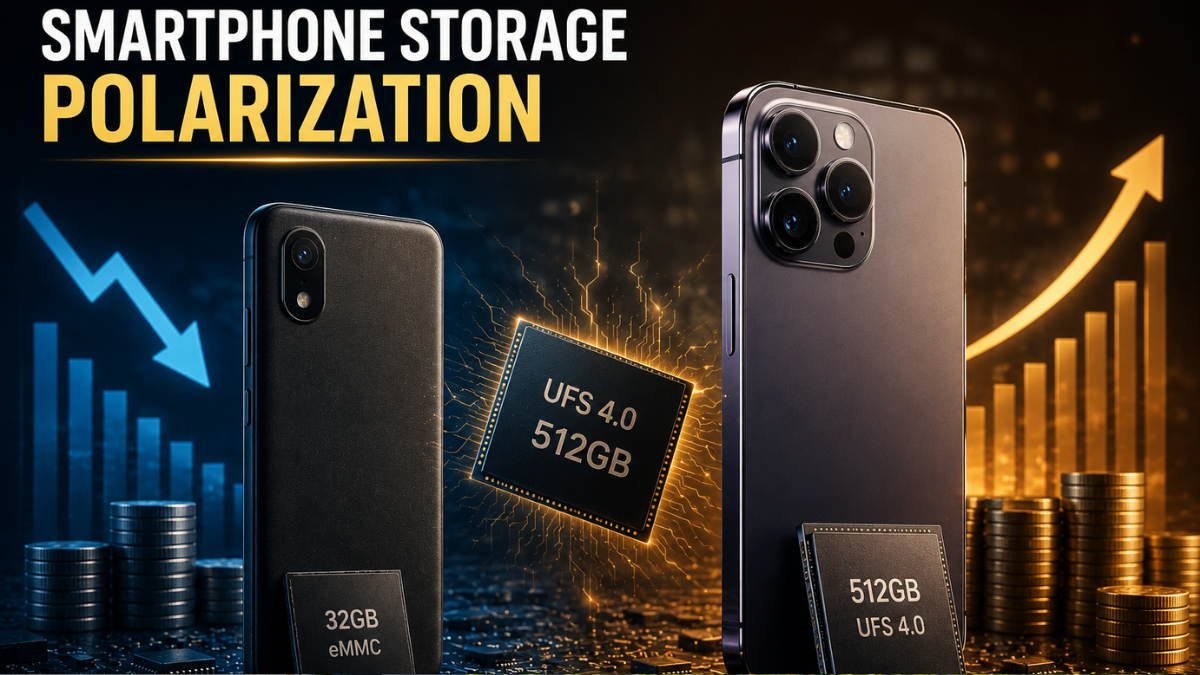
Memory prices are going up. And the smartphone market is splitting right down the middle.
That's the core of what Omdia's latest research is tracking - and if you follow smartphones at any level, whether as a buyer, an investor, or just someone who watches the tech industry, this matters more than you might think. The Omdia smartphone storage polarization rising memory components cost trend isn't just a supply chain footnote. It's actively reshaping which phones get built, at what specs, and at what price point.
Jusy Hong, senior research manager at Omdia, put it plainly: high-end models will continue upgrading storage capacity this year, while entry-level models are trending toward downgrades. Two segments. Two completely different trajectories.
What Omdia's Storage Polarization Research Actually Shows
Here's what's happening. Rising DRAM and NAND flash prices - the two memory types that make up a significant share of a phone's bill of materials - are squeezing manufacturers from both ends. Consumers keep raising performance expectations for premium devices. And budget-tier margin compression is getting genuinely painful.
The result is a split strategy. Omdia global smartphone market storage configuration polarization 2026 data makes this clear: flagship and high-end models are upgrading storage configurations to justify higher retail prices and support growing feature expectations. Budget and entry-level models, meanwhile, are cutting storage specs to manage costs. Jusy Hong's analysis suggests this trend isn't just beginning - it's accelerating.
How Rising Memory Component Costs Got This Severe
The memory cost problem doesn't have one cause. But two factors are doing most of the damage.
First, NAND flash and DRAM supply has been tight - largely because the biggest chip manufacturers can't ramp capacity fast enough to meet AI infrastructure demand. GenAI server deployments are consuming memory allocations that used to flow into mobile. The competitive dynamics behind China's DRAM supply deal show just how aggressively the server segment is locking up supply.
Second, new fab capacity takes years to actually matter. Samsung wafer fab expansion plans have been pulled forward, but even optimistic timelines push meaningful output gains toward 2029. Some estimates put memory price increases in the 200% range for certain NAND flash configurations. Counterpoint Research smartphone BoM cost inflation analysis has flagged similar pressures across total handset manufacturing costs. At those numbers, the math simply doesn't work for budget devices if specs stay flat.
Budget Phones Are Taking the Hardest Hit
The sub-four-hundred-dollar smartphone shipment segment is where the pressure is most visible. Brands operating in emerging markets - Transsion, Honor, Xiaomi, Oppo, and Vivo among them - face a hard choice: absorb the cost, raise retail prices, or reduce storage specs. Most are choosing some version of all three.
For buyers in Southeast Asia, South Asia, and Sub-Saharan Africa, that means either paying more for the same device they bought last year or settling for less storage than they expected. Student smartphone purchase trends from mid-2026 already show the shift - price-conscious buyers are stretching upgrade cycles or moving toward refurbished options when new device prices cross their threshold.
China 618 smartphone sales data from this year's shopping festival told a consistent story: premium segments held up, but budget-tier unit volume lagged behind previous cycles.
Flagship Phones Are Moving the Other Way
High-end devices aren't immune to rising memory costs. But they're absorbing them differently.
Smartphone average selling price (ASP) is hitting record highs partly because manufacturers are using premium positioning to justify higher retail price tags - and higher storage tiers come along for the ride. A flagship that shipped with 256GB base storage last year might spec 512GB this year, using the upgrade as a selling point while also covering the price bump. Honestly, it's a smart product move. If you're raising prices anyway because of memory cost inflation, you might as well give buyers a feature they can actually point to.
MWC Shanghai mobile AI signals from earlier this year underscored exactly this - the premium segment is leaning hard into on-device AI as a justification for higher storage specs, since running large models locally requires real headroom. GSMA smartphone evolution trends reinforced the same point: storage capacity is increasingly tied to AI feature delivery, giving flagship brands a clear and defensible narrative for the upgrade cycle.
Why This Is Bigger Than Just Smartphones
The Omdia smartphone storage polarization rising memory components cost story connects to a wider set of shifts across the semiconductor landscape.
AI-driven chip demand is pulling resources toward servers and away from mobile - a pattern the CISCE 2026 chip showcase made visible, with AI chip investment dominating the exhibition floor. China's 3D chip stacking development reflects domestic efforts to solve density and cost problems through architecture rather than raw fab scale. Korean fabless chipmakers in China are positioning aggressively in that market, signaling where the growth opportunity is perceived right now. And China manufacturing output signals - while showing a return to expansion territory - haven't yet translated into meaningful component price relief on the ground.
Omdia's prediction of severe polarization in smartphone storage configurations this year feels well-supported precisely because the conditions driving it aren't short-term.
What This Means for You Right Now
If you're shopping for a new phone, check storage specs carefully. Budget shoppers especially - what you got for $200 last year might come with less storage at the same price in 2026, or cost meaningfully more for the same specs. Premium buyers may actually find the value proposition has improved, with base storage tiers genuinely upgraded even as overall prices climbed.
And if the new retail prices feel wrong to you? They're not your imagination. The Omdia smartphone storage polarization, rising memory component costs, and trend are real, data-backed, and hitting the budget segment harder than any other. The market is not moving evenly right now - and knowing which direction your price tier is moving makes a real difference.