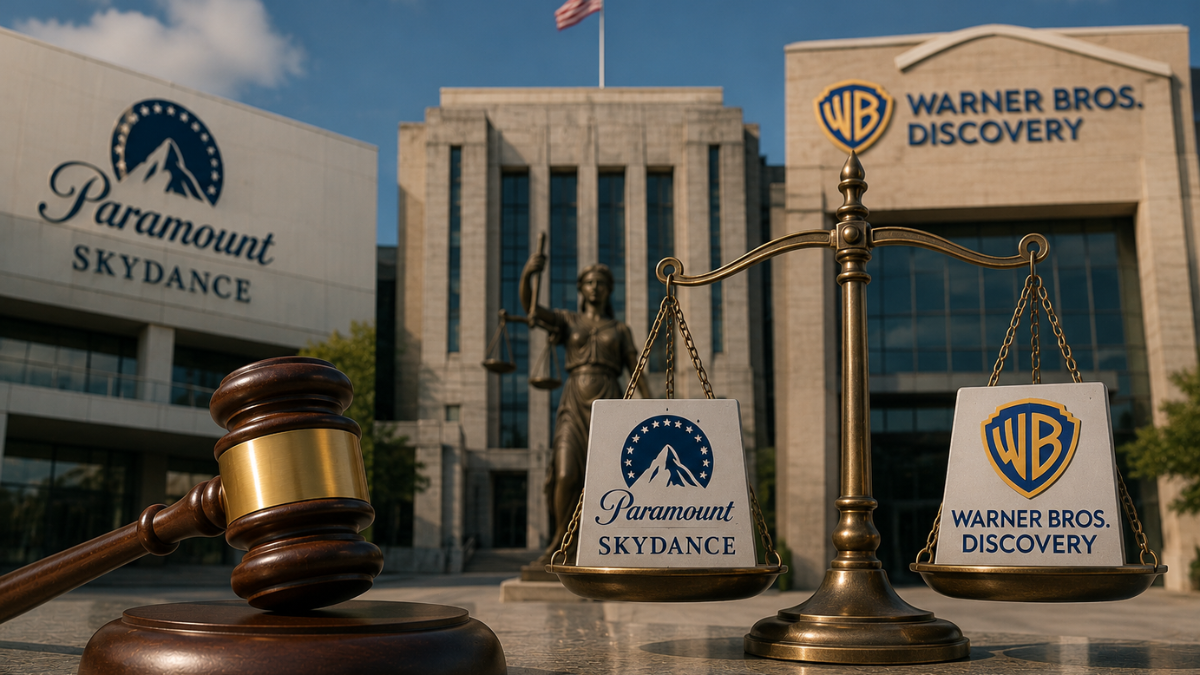
On July 20, a federal judge ordered the Paramount Skydance Warner Bros acquisition through August 3 - putting the $110 billion deal on hold while a California-led coalition of states fights to block it on antitrust grounds. U.S. District Judge Araceli Martinez Olguin, sitting in Oakland federal court, ruled that the states had made a "strong showing" that the merger would unlawfully reduce competition. Warner Bros. Discovery shares fell as much as 4% that same afternoon.
That's the headline. But the real story is what happens August 3.
Why 12 States Sued to Block the Paramount Skydance Warner Bros Acquisition
California and 11 other states - including New York, Colorado, and Massachusetts - filed their lawsuit in Oakland federal court on July 13. Their argument is specific: the combined Paramount-Warner Bros. entity would control roughly 27% of the market for distributing widely released films. With fewer major distributors holding that kind of leverage, studios would find it easier to pressure theater owners for a bigger cut of ticket revenue. Moviegoers, eventually, foot the bill.
New York Attorney General Letitia James didn't hold back after the ruling. "Today's decision is an important victory for all those who would be hurt by this merger," she said, adding she looks forward to continuing the fight.
The states also argued that some harms can't be undone once the deal closes. Jobs get cut. Sensitive competitive data gets shared between what were once rival companies. You can't un-ring that bell - and Judge Martinez Olguin agreed. That reasoning was enough to justify the pause.
What the Court Found - and What Remains Unsettled
Here's what a lot of coverage is getting wrong: this ruling is not a final verdict. Not even close.
Judge Martinez Olguin's order doesn't mean the merger is dead. It means the states raised concerns credible enough that closing the deal before trial could cause irreversible damage. Paramount Skydance argued that Amazon and Apple's entry into the film market changes the competitive picture. The judge wasn't convinced - not yet. But the company still gets its day in court.
A Paramount spokesperson said the antitrust arguments have "no basis in modern market realities." The full case heads to trial, where both sides present evidence and a final determination gets made.
This is an industry-reshaping acquisition facing the full weight of coordinated state-level legal pressure. Deals under that kind of scrutiny rarely move cleanly.
The Ticking Fee: What the Pause Is Actually Costing
This is where the Paramount Skydance Warner Bros acquisition court pause gets financially painful. Fast.
Under the merger agreement, every calendar day the deal closes past September 30 triggers a 25-cent-per-share "ticking fee" that David Ellison owes to Warner Bros. shareholders. That's roughly $7 million per day. A few weeks of legal delay is uncomfortable. A few months is a crisis.
Anyone tracking regulatory hurdles for investors in high-stakes situations like this knows how extended timelines quietly erode the financial logic behind even well-structured deals. This is a billion-dollar corporate deal with a clock running against it in more ways than one.
The deal-driven stock market reaction was immediate: WBD shares dropped 4% in a single afternoon. Markets aren't just pricing in procedural noise. They're pricing in genuine deal risk.
What the August 3 Court Pause Hearing Will Actually Decide for the Paramount Warner Bros Deal
August 3 is the real turning point here.
That's when Judge Martinez Olguin hears arguments on whether to extend the Paramount Skydance Warner Bros acquisition court pause through the full course of litigation. If she grants a full preliminary injunction, this case isn't resolved in weeks - it could stretch for months, or longer. That timeline shapes everything: ticking fees, board-level risk reviews, whether the deal structure can survive intact.
Companies dealing with shifting capital market rules and prolonged regulatory approval timelines know that court-driven delays can quietly kill deals that looked viable on paper. Paramount Skydance is now living that reality in real time.
What David Ellison Is Actually Trying to Build
Ellison's goal isn't subtle. He wants to turn Paramount into a genuine competitor to Netflix and Disney. Warner Bros. gives him the franchise libraries, distribution infrastructure, and content depth to do that - things Paramount simply can't build fast enough on its own.
Does that strategic logic hold up legally? His team says yes. The states say no. August 3 is where that argument actually starts getting tested in earnest.
Deals like this one involve complex cross-border investment negotiations, layered joint venture deal strategy considerations across multiple media rights territories, and the kind of market consolidation under scrutiny that antitrust regulators have historically resisted at this scale.
27% of theatrical film distribution under one roof isn't nothing. And the judge noticed.
What Happens After August 3
The Paramount Skydance Warner Bros acquisition court pause is, right now, a temporary hold. August 3 could change that entirely.
If Judge Martinez Olguin extends the injunction through the life of the trial, Ellison's options narrow fast. He can absorb millions in daily fees while litigating. Try to renegotiate deal terms under duress. Or walk. None of those paths are clean, and none are cheap.
This case matters well beyond Paramount and Warner Bros. The questions it raises - about theatrical distribution market power, what counts as a competitive market in 2026 media, and how courts evaluate consolidation in an era of streaming giants - won't be settled quickly. The outcome of this antitrust battle will shape how regulators and courts approach entertainment industry deals for years.
August 3 is just the beginning.