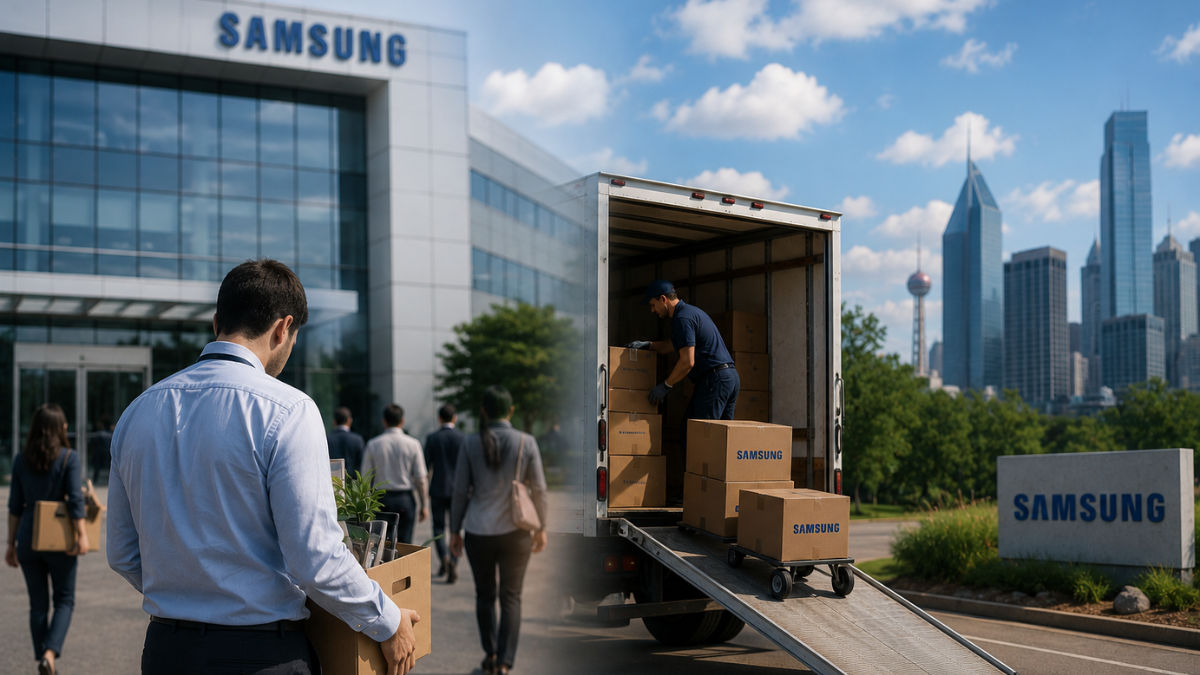
The news landed on a Friday. Samsung Electronics America (SEA) - the U.S. consumer electronics arm handling phones, displays, and home appliances - quietly confirmed that 739 roles in Englewood Cliffs, New Jersey, have been affected by its planned headquarters move to Texas. The Samsung Electronics America New Jersey WARN notice workforce reduction has since triggered a flood of questions from workers, local officials, and industry watchers alike.
Here's what's confirmed, what's still fuzzy, and why this move matters beyond the immediate job numbers.
What the New Jersey WARN Notice Actually Confirms
Under New Jersey's Worker Adjustment and Retraining Notification laws, employers have to provide advance notice before large-scale workforce changes take effect. The Samsung Electronics America Englewood Cliffs jobs reduction triggered that requirement in June, and the 739-role figure was subsequently confirmed in Samsung's official statement to Reuters.
But the statement was careful. A majority of those 739 affected employees reportedly received relocation offers to Texas. Others were let go outright. Samsung didn't specify how many fell into each group - which, if you're one of those 739 people, is frustratingly the only number that actually matters right now.
There's also a separate layer at SEA's Plano, Texas office. Around 100 workers there - including staff in the mobile division - were reportedly let go as well. A source confirmed to Reuters they were personally among those laid off. Samsung hasn't officially confirmed that Texas figure.
Relocation vs. Layoff: Why the Distinction Matters for Samsung Workers
Look, this isn't just semantics. Corporate relocation and an outright layoff carry different legal and financial weight for employees.
When a company moves its headquarters, it typically presents affected workers with a choice: relocate or accept a separation package. What happens if Samsung employees refuse to relocate to Texas? In most cases, declining the offer is classified as voluntary separation - which can affect unemployment eligibility and how severance terms apply, depending on the specific employment contract.
Samsung framed its Samsung Electronics America New Jersey WARN notice workforce reduction as a byproduct of the headquarters move, not a standalone downsizing decision. Its statement said the shift "may lead to changes in our workforce structure, such as employees who are unable to relocate, or certain functions that are optimized to ensure our roles align to key business priorities." That's precise language. "Unable to relocate" covers a lot of ground.
Why Is Samsung Electronics America Moving from New Jersey to Texas?
Texas has become a default destination for major tech companies realigning their operations. Lower taxes, lighter regulations, and significant sovereign regional tax incentives for corporate relocations have made it a draw for firms from Tesla and Oracle to Amazon. Samsung fits that trend.
For SEA specifically, Texas already makes operational sense. Samsung's chip factories are there. Its mobile hub operates in Plano. Bringing SEA's headquarters into that same ecosystem creates proximity to existing infrastructure that a New Jersey address just can't match.
What makes the timing stand out is that SEA employees had only recently moved into brand-new Englewood Cliffs offices - with considerable fanfare - less than a year before this announcement. U.S. Representative Josh Gottheimer attended the September ribbon-cutting and cited roughly 1,200 workers in the New Jersey operation at the time. His Samsung New Jersey statement when the workforce news broke was direct, and notably unenthusiastic about the company's decision.
When the Chip Division Thrives, and Consumer Electronics Doesn't
This is the real tension underneath everything happening at Samsung right now.
The chip side is having a historically strong period. Samsung flagged a near-19-fold jump in second-quarter operating profit driven by AI-powered demand. Samsung semiconductor expansion plans involve hundreds of billions in new fab investment, with production timelines pulled forward aggressively. That's a different universe from SEA's situation.
SEA's mobile division is expected to post its first-ever operating loss. Apple's competition is relentless. Chinese brands like TCL and Hisense are pressing hard on TVs and appliances. And higher chip costs - a direct consequence of the same AI boom lifting Samsung's semiconductor arm - are squeezing consumer margins across the board. Across the gadgets and electronics sector, this cost-squeeze pattern is becoming familiar.
The competitive pressure goes deeper than Samsung alone. Semiconductor supply pressure from AI infrastructure buildout flows downstream into consumer hardware economics. DRAM supply chain shifts are changing who profits in the hardware stack. AI chip competition is intensifying globally, and Korean chipmakers targeting global markets are moving aggressively just as the advanced chip development race enters a new phase. Add chip market disruption from new players across multiple markets, and it's clear why Samsung is doubling down on chips - and why the consumer side is absorbing pressure instead.
What Current Samsung Employees Are Worried About
One current SEA employee told Reuters the concern isn't only the existing cuts.
It's what might come next: additional rounds of layoffs, followed by a consolidation of Samsung's appliance, home entertainment, and mobile divisions as the company refocuses U.S. resources around chips and AI. Samsung pushed back on this directly. Its statement said there's "currently no broad, global restructuring underway" in its consumer product business.
That word "currently" is worth sitting with for a moment.
Separately, Samsung SDS America - an IT services affiliate, not part of SEA - filed its own WARN notice flagging 179 potential role cuts at Ridgefield Park, New Jersey. Samsung was explicit that those Samsung SDS America Ridgefield Park workforce changes are linked to that affiliate's own North American headquarters relocation and have nothing to do with SEA's situation. Two WARN notices. Two separate relocations. Important not to conflate them.
Tech Workforce Trends: Samsung Isn't Alone
Microsoft, Amazon, and Meta have all cut jobs while redirecting investment toward AI infrastructure. Samsung's moves fit that broader playbook. The global tech workforce trends of 2026 point consistently in one direction: concentrate capital on AI and advanced compute, trim consumer-facing headcount where margins are thin.
The semiconductor industry outlook clearly reflects this reorientation. Capital is flowing toward chips and AI infrastructure. Consumer electronics - with intense competition, thin margins, and exposure to chip cost volatility - is where the pressure lands.
For the workers named in the Samsung Electronics America New Jersey WARN notice workforce reduction, none of that broader context makes the immediate situation easier. But it does explain why this announcement came when it did - and why the impact of tech corporate headquarters moving to Texas is being felt right now in Englewood Cliffs.