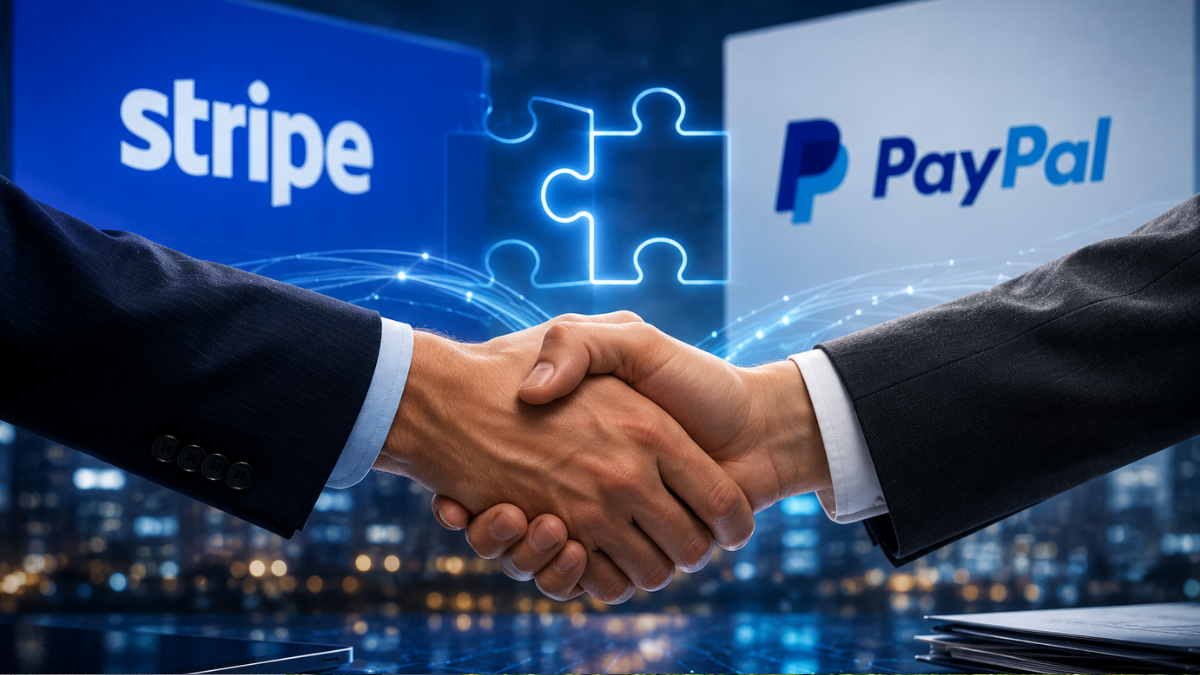
The Stripe Advent joint offer to buy PayPal 53 billion dollars is the most significant move in digital payments in years. Submitted earlier this month, backed by roughly $50 billion in committed bank financing, and structured as a full equal partnership - this isn't speculation. It's a serious, bankrolled bid for one of the most recognized names in online payments.
Here's what's actually being proposed, and why it matters.
What the Deal Actually Looks Like
Stripe and Advent International submitted their offer at $60.50 per share - a price representing a 28% premium over PayPal's closing price on the day the offer was reported. Total valuation: just over $53 billion. That's the headline, and it is a big one.
What's less obvious is the structure. This isn't a breakup play. Under the current terms, Stripe and Advent would each hold equal stakes and run PayPal together as a single entity. Venmo stays. The checkout business stays. No carve-outs, no auctions for individual units - at least not in the proposal as it stands.
PayPal hasn't responded publicly. The companies declined to comment, and deal discussions are described as confidential, first reported by Milana Vinn covering fintech mergers and acquisitions from New York. Stripe and Advent made their initial approach back in April and are now pushing for a formal reply. Banks have already committed the financing, which is a meaningful signal - these things don't happen without serious intent behind them.
It's the kind of move that makes tech stocks rise on deal news, and PayPal shares responded accordingly when the offer surfaced.
How PayPal Got Here
PayPal's fall from its 2021 peak has been brutal. At its height, the company's market cap hit roughly $360 billion. Today it's sitting around $36 billion - a drop of more than 40% over the past year alone.
That kind of decline doesn't happen by accident.
Apple Pay and Google Pay captured consumer mindshare faster than anyone expected, particularly in mobile. Global market competition reshaping the fintech sector hit legacy checkout platforms hardest, and PayPal got squeezed from both directions at once - slower consumer adoption on one side, faster-moving rivals on the other.
But the underlying numbers tell a different story than the stock price suggests. Revenue rose 7% to $8.35 billion in Q1, beating analyst estimates of $8.05 billion. Total payment volumes jumped 8% year-over-year on a currency-neutral basis, reaching about $464 billion. That's not a broken business. That's a business with real transaction scale and a beaten-down valuation - exactly the profile acquirers target.
Tech stock market resilience gets misread as stagnation all the time. PayPal's core volumes didn't collapse with the stock price. The market stopped believing in the growth story - and that's a gap a new owner can potentially close.
Enrique Lores Has Already Started Fixing It
When Enrique Lores took over as CEO in March, he didn't wait around. He launched a sweeping operational overhaul to cut redundant layers and sharpen focus on the areas where PayPal can actually compete.
In April, the company reorganized into three distinct units: checkout, Venmo and consumer financial services, and payments plus cryptocurrency. Cleaner structure, clearer business lines. Lores also outlined plans to use AI across operations to eliminate workforce duplication and reduce overhead - the projected savings are around $1.5 billion over two to three years, money PayPal says it'll reinvest into growth rather than return as profit.
From any acquirer's perspective, that internal work is a feature, not a footnote. Less integration complexity post-close. Navigating capital market rules for tech firms will also matter here - a transaction this large triggers regulatory review across multiple jurisdictions, and how the reorganized business units get classified can shape the entire process.
Where Stripe Fits In
Stripe is privately held, which makes it an unusual buyer for a publicly traded company. But it's not a small one. In February, a tender offer valued Stripe at $159 billion - more than a 70% jump from a similar share sale the year before. The share placement drives tech rally dynamic was obvious in how markets responded to that valuation signal.
Stripe, headquartered across San Francisco and Dublin, handles payment acceptance, payouts, and financial process automation for businesses of all sizes. Its strengths lean toward developers and B2B clients. PayPal owns consumer brand recognition and a massive two-sided network. The product overlap is real but limited - which means the combination covers more ground than either company does alone.
Stripe sits near the top of global unicorn valuations in 2026, and a deal this size would only cement that position.
Advent's Role and the Bigger M&A Picture
Advent International isn't new to payments. The firm backs Nuvei, the Canadian payment company that acquired Payoneer Global for $2.75 billion. That's a deliberate joint investment portfolio strategy across global payment infrastructure, built piece by piece. PayPal would be by far its largest bet.
Zoom out, and the context gets bigger fast. Global Payments agreed to acquire Worldpay from GTCR and FIS in 2025 for $24.25 billion - a three-way deal where GTCR exited its 55% stake, and FIS sold its remaining 45%. Mastercard is reportedly exploring selling a majority stake in UK payments subsidiary Vocalink back to British banks. Every billion-dollar tech deal in this space is part of the same story: scale up or get acquired.
Cross-border and business-to-business payments are where growth is. Traditional processing is slowing. This Stripe Advent joint offer for PayPal would be a defining major tech sector deal in the current fintech consolidation wave. Tech finance growth signals throughout 2026 have consistently pointed toward this kind of M&A activity accelerating - not slowing down.
What Comes Next
Nobody outside the deal rooms knows for certain. PayPal's board hasn't publicly acknowledged the offer. The proposal could stall, evolve, or get rejected outright. But committed bank financing and months of prior outreach suggest Stripe and Advent aren't bluffing.
For investors in overseas tech transfers and cross-border payment networks, a Stripe-PayPal combination would carry serious implications across markets globally. Both companies operate internationally. Any deal would trigger trade and investment consultation processes with regulators in the U.S., EU, and UK at the same time.
The Stripe-Advent joint offer to buy PayPal 53 billion dollars has forced an industry-wide conversation about what PayPal is actually worth - and who it belongs to next.
What This Deal Really Signals
The Stripe Advent joint offer to buy PayPal for 53 billion dollars isn't just a headline. It's a signal about where digital payments is heading - toward scale, consolidation, and control of the full payment stack from checkout to cross-border settlement.
PayPal has the brand and the transaction volume. Stripe has the technology layer and the developer relationships. Advent has the capital and a payments M&A playbook that's already in motion. Watch whether PayPal's board opens formal discussions, and whether regulators handling fintech mergers and acquisitions and bank financing commit 2026-scale deals can keep pace with an industry that's clearly not waiting around.