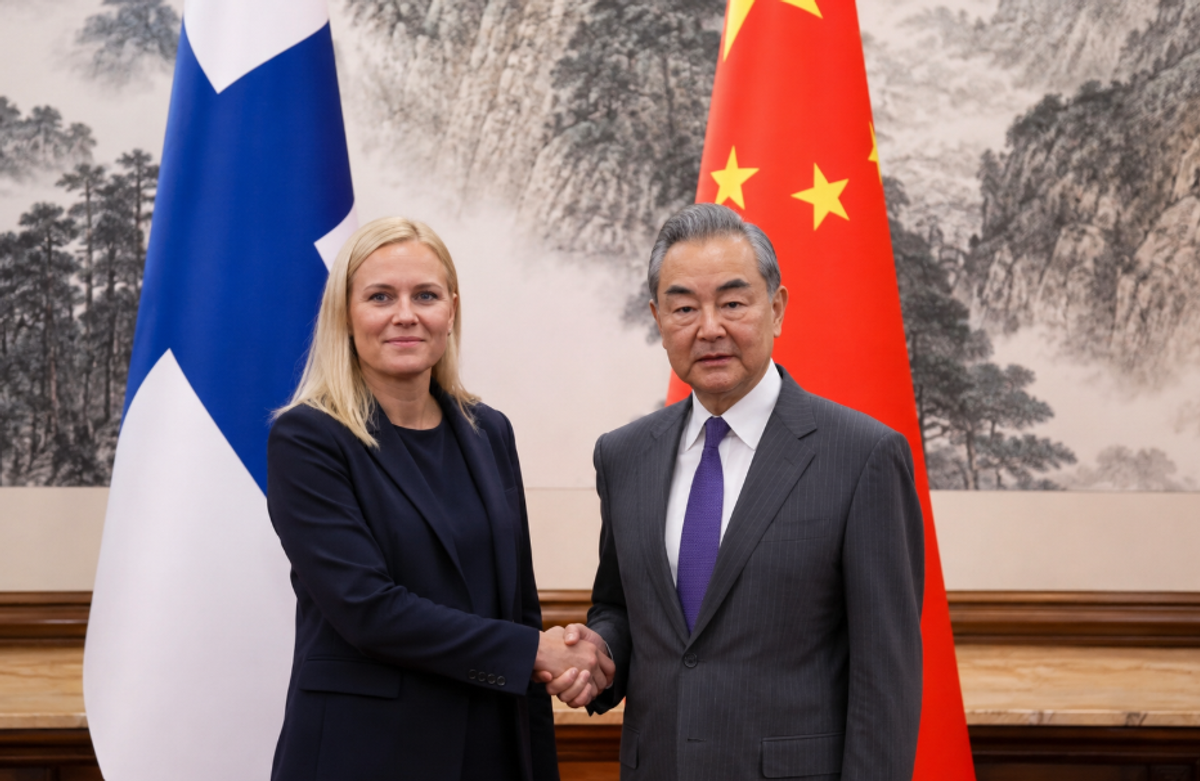
When Chinese Foreign Minister Wang Yi arrived in Helsinki on July 5, 2026, the visit carried more weight than a standard diplomatic stop. China-Finland cooperation on the green transition and AI moved from intention to structured commitment - backed by a Joint Action Plan between China and Finland 2026, fresh pledges on trade and investment, and some pointed comments about how the China-Europe relationship should actually work.
Two foreign ministers. One action plan. And a clear signal that both sides want more.
What Wang Yi and Valtonen Actually Said
Wang Yi - also a member of the Political Bureau of the Communist Party of China Central Committee, as reported by Xinhua - laid it out plainly during bilateral talks with Finnish Foreign Minister Elina Valtonen. China is ready to work with Finland in openness and mutual benefit. He named three specific focus areas: green transition, scientific and technological innovation, and artificial intelligence.
All three. Together.
Valtonen confirmed alignment from Finland's side, reaffirming the country's adherence to the one China principle and pointing to Finland's long history of engagement with Beijing. She said Finland wants to actively "tap the potential" for cooperation in green and low-carbon development, the digital economy and climate change, health care, and trade and investment.
That's four concrete sectors, clearly named. Not a vague statement of intent.
She also specifically cited President Xi Jinping's philosophy that "lucid waters and lush mountains are invaluable assets," saying Finland genuinely appreciates that vision. That kind of explicit environmental alignment, from a European foreign minister, isn't something that happens by accident - and it reflects Finland's genuine appreciation of China's vision of sustainable development and innovation.
Seventy-Six Years - and Why the Foundation Is Real
Here's context that tends to get buried in the headlines. China-Finland diplomatic ties go back 76 years. Finland was among the first Western countries to recognize New China, and the first Western country to sign an intergovernmental trade agreement with China. That historical track record is the reason the language in Helsinki was so direct.
Wang Yi said China-Finland ties have "remained at the forefront of China's bilateral relations with Nordic countries" - setting an example of equal exchanges between countries with different social systems. The future-oriented new-type cooperative partnership between China and Finland was established in 2017. So the current expansion of China-Finland cooperation on the green transition and AI isn't a new relationship being built from scratch. It's an existing one being deliberately upgraded.
That distinction matters. Safeguarding the political foundations of Nordic China relations starts from a very different position here than it does in most of Europe right now.
Green Transition: Where Both Sides Have Something Real to Offer
Wang Yi was clear that promoting green and low-carbon development is a longstanding Chinese government policy. And he acknowledged what most observers already know: Finland has "unique strengths" in sustainable development and innovation.
So this isn't one country teaching the other. It's a genuine exchange.
China has moved fast on energy infrastructure. The country's first green electricity AI data center is already operational, and the broader race around AI and green energy integration is picking up speed across both countries. Finland's expertise in clean tech, energy efficiency, and low-carbon industrial processes gives it real value in that context - and understanding the impact of the China-Finland joint action plan on green technology transfers is increasingly relevant to Nordic countries’ trade and investment consultations with China, too.
If you've been tracking China's AI and climate targets, you'll know the domestic policy infrastructure behind these commitments is already in place on China's side.
AI and Digital Economy: The Newer Layer of This Partnership
The AI inclusion in the Helsinki talks wasn't incidental. China's AI sector growth has accelerated sharply in 2026, with Chinese AI reshaping global competition in real time - partly because of China's open-source AI rise, which moved faster than most predicted.
Finland's advanced digital infrastructure makes it a genuine candidate for how cross-border digital economy cooperation shapes future-oriented new-type partnerships. The UNDP Sustainable Innovation Lab cross-border tech ties already demonstrate what works beyond formal government channels.
China's AI global governance approach - including China's UN AI accessibility statement backed by 65 countries - overlaps with Finland's interest in multilateral AI policy. Both sides confirmed willingness to strengthen communication via the United Nations and other multilateral platforms. How artificial intelligence policy alignment drives inclusive and sustainable digital growth patterns is still being defined. But the Helsinki talks made clear both countries want to help define it.
China's innovation economic blueprint gives the fuller context for where China sees AI and digital investment heading at the national level.
Trade, Investment, and the Tension Wang Yi Named Directly
Wang Yi's sharpest remarks were on trade. He said clearly that the China-Europe trade and investment consultation mechanism "should not be used as a tool for unilateral pressure." Then he asked Finland to play an "active role" in promoting stable China-Europe relations.
That's a real ask, not just diplomatic boilerplate. Bypassing unilateral trade pressure via constructive dialogue is the approach Wang Yi is calling for from European partners - and Finland, given its 76-year track record, is one of the more credible voices to make that case within the EU.
The China-EU trade consultation mechanism is under scrutiny heading into autumn 2026. An open approach to China cooperation isn't just a diplomatic preference at this point - it's economically rational. European demand for Chinese tech is reshaping supply chains in real time, regardless of political friction.
Why constructive dialogue between Europe and China is required for global climate challenges keeps coming back to the same basic point: the scale of these problems makes unilateral leverage a losing strategy for everyone involved.
What the Helsinki Talks Signal for 2026
The China-Finland cooperation green transition and AI agenda coming out of July 5 is, at its core, a case study in what constructive bilateral diplomacy can look like when the political foundation is already solid.
Finland isn't a superpower. But it's a credible partner - with a longer, more consistent China relationship than almost any other Western country. Both ministers acknowledged it. And why Finland appreciates China's vision of sustainable development and innovation came through clearly in Valtonen's remarks.
Measurable, scalable climate coordination on multilateral platforms. Real digital economy partnerships. China-Europe green and low-carbon development trade built on mutual benefit rather than leverage. Both sides said it, in different ways.
Now it's implementation.