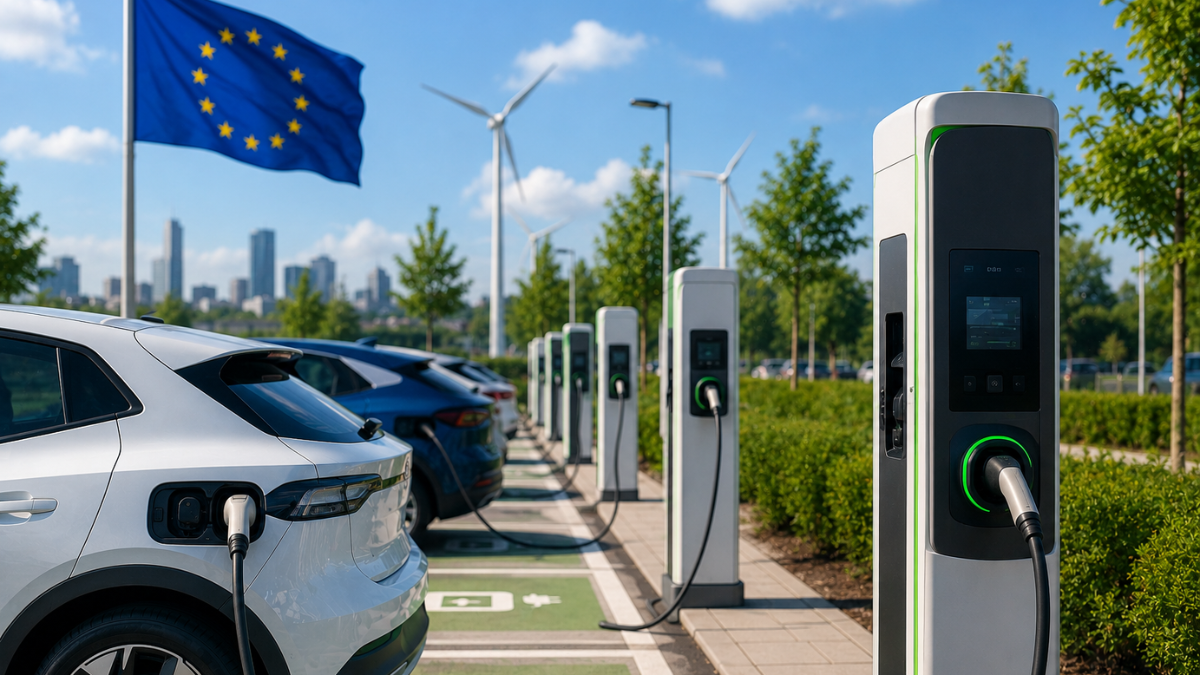
If you've been following the debate over Europe's electric future, you've probably heard the argument: the charging network just isn't ready. Automakers have leaned on that claim to justify slower timelines for phasing out internal combustion engine vehicles. But new data from Transport & Environment (T&E), published July 20, says otherwise.
According to T&E's analysis, the EU public charging infrastructure outpaces EV sales targets across nearly every member state. Almost all 27 EU countries are already meeting fleet-linked charging requirements - and the overall network has grown to a scale that's genuinely hard to argue against.
So where does that leave the "infrastructure isn't ready" case? On much shakier ground than it was.
The T&E Numbers: 1.1 Million Points and Five Times the 2020 Level
Start with the raw scale. The public charging network reached 1.1 million points across the EU by the end of 2025. That's five times the 2020 deployment level. Five times, in five years.
T&E found that the EU exceeds its AFIR fleet-based charging target by 180%. The Alternative Fuels Infrastructure Regulation fleet targets 2026 tie benchmarks to how many battery-electric vehicles are actually in use in each country - not a fixed number. By that measure, the EU isn't just on track. It's well ahead.
The T and E analysis battery electric vehicle fleet growth makes the trend clear: charging capacity has been outrunning adoption, not lagging behind it. This is part of why EU public charging capacity has outpaced EV sales targets so dramatically - the regulatory framework essentially forced proactive buildout rather than reactive catch-up.
That pattern connects to a much wider shift happening across energy sectors globally. The green energy infrastructure race is reshaping industries far beyond transport - and Europe's charging buildout is one of the clearest examples of that dynamic playing out in practice.
Why EU Public Charging Infrastructure Outpaces EV Sales Targets - And What That Means for Carmakers
Here's the tension at the center of this story. Some automakers have argued that inadequate charging infrastructure and soft consumer demand justify a slower European Union shift away from internal combustion engine vehicles. It's a framing that's had real traction in policy circles.
But the T&E data makes the carmakers' argument on inadequate charging network very difficult to sustain. When virtually every EU member state is meeting its fleet-linked public charging requirements ahead of schedule, "the infrastructure isn't there" stops being a credible defense. The numbers don't support it.
This isn't just a European dynamic, either. China's EV market race shows what happens when infrastructure and adoption accelerate together under competitive pressure - and Europe is watching that race closely. Meanwhile, BYD's self-driving chip leap is a reminder that technology gaps elsewhere are closing fast, making the case for delay even harder to defend.
The EU green transition push also signals that political momentum toward electrification isn't softening anytime soon. Which makes the carmaker position increasingly hard to hold.
One Genuine Gap: Ultra-Fast Chargers on Core Corridors
That said - this isn't a perfect picture, and it'd be dishonest to frame it that way.
The European Union core transport network ultra-fast charger status sits at just 79% compliance. Roughly one in five key corridor locations - the highways and cross-border routes where long-distance drivers depend on fast charging - still doesn't meet the required standard.
For city driving and short trips, you're generally fine. For longer journeys across borders? That gap is real, and you'll notice it.
This is the one credible caveat in an otherwise strong dataset. And it's where the next wave of EV charging investments will likely need to concentrate - corridor-based, high-throughput infrastructure rather than continued urban expansion.
Malta: The One Exception
Every EU country meets the fleet-linked public charging requirements except Malta.
The island is the only member state that hasn't met its EU public charging network requirements threshold. Malta's geography and size create constraints that genuinely aren't comparable to continental members, but the exception is real - and worth naming rather than quietly setting aside.
What Explains EU Public Charging Infrastructure Outpacing EV Sales Targets at This Scale
A few things converging at once.
AFIR created binding fleet-linked targets that pushed member states to build ahead of EV adoption rather than in response to it. Regulatory pressure matters. Alongside that, private capital has been flowing into the sector on the expectation of long-term EV growth. Infrastructure investment, in markets with clear long-term signals, tends to run ahead of current demand - you see the same dynamic in green electricity grid buildout programs across regions.
The supply-chain dimension adds another layer. Europe's surging import demand for technology components tied to the energy transition is already reshaping global supply chains in real time. Europe's Chinese EV component market continues to expand as manufacturers scale to meet that demand, and China-EU trade consultations scheduled for autumn 2026 will increasingly address the standards and tariff questions that come with it.
Zooming out: when the EU public charging infrastructure outpaces EV sales targets by 180% on the fleet-based measure, the "we're not ready" argument loses its main support. Meeting global climate targets becomes a little more achievable when the infrastructure data backs the ambition - not just the rhetoric.
The automotive industry soft demand vs infrastructure deployment EU framing may need to be retired. If demand is softer than expected, it's not because the chargers aren't there.
What This Means for Europe's Electric Vehicle Transition
The data is clear: EU public charging infrastructure outpaces EV sales targets by 180% on the fleet-based AFIR measure. Nearly every member state has met its requirements. The network has grown fivefold since 2020. Europe's charging capacity outpaced EV sales targets not by a little - by nearly double what was required.
The remaining gaps are real but narrow. The 79% ultra-fast charger compliance rate on key corridors needs attention, and Malta remains the one country that hasn't cleared its fleet-linked threshold. Those are genuine to-do items. But they're not signs of a system in trouble.
The bigger implication is this: the argument that Europe needs to slow its transition away from ICE vehicles because the charging network can't keep up has largely lost its strongest data point. The infrastructure is there. What comes next depends on whether EV adoption accelerates to actually use it.